


.avif)

You've narrowed your loyalty platform search to two established names: Punchh and Paytronix. Both have long track records. Both serve enterprise restaurant brands. Both show up on every shortlist. But "established" isn't a strategy, and the two platforms serve meaningfully different types of operators. Choosing the wrong one can mean years of friction before you see it.
The problem is that these platforms compete on feature depth and brand-name clients rather than on the outcomes that actually matter: how many guests come back, how often, and whether the program pays for itself. This comparison breaks down both platforms across the dimensions that operators care about most — then shows why a growing number of brands are choosing a third option entirely.
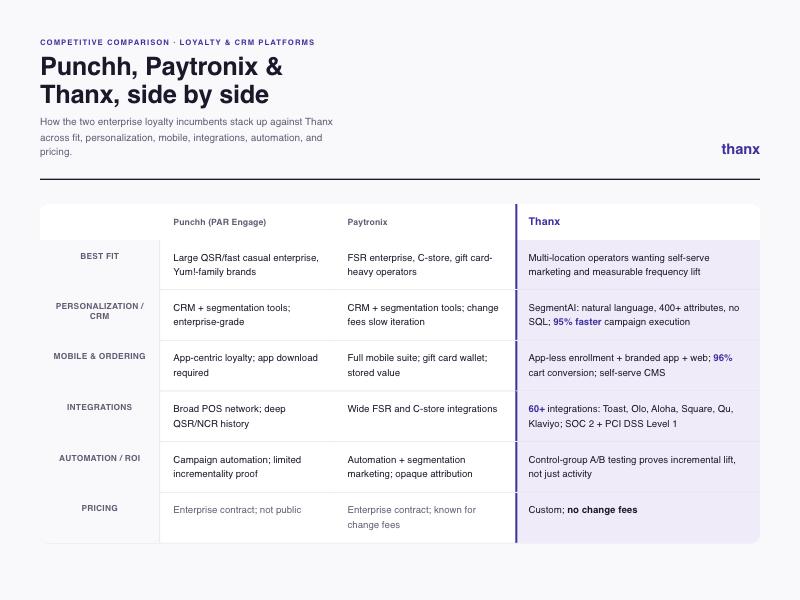
Punchh vs. Paytronix loyalty program at a glance
Best fit
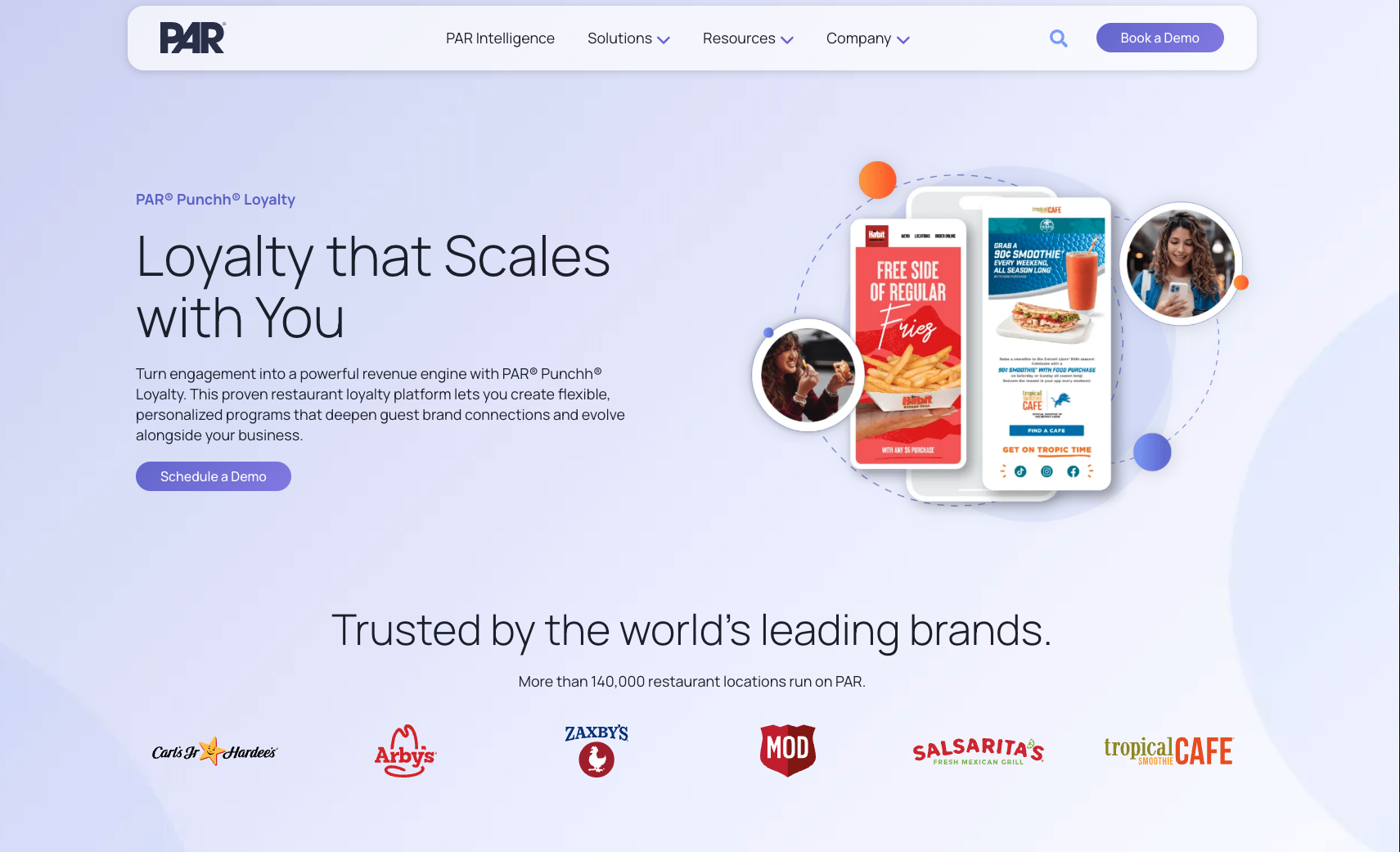
Punchh
Punchh is built for large QSR and fast casual enterprise chains and is now part of PAR Technology, particularly those in the Yum! Brands' family or complex franchise structures (Jack in the Box, El Pollo Loco, Papa John's, Denny's). It is aimed at multi unit restaurant chains rather than independent restaurants or small restaurants. If your brand operates at a national scale in QSR and already uses PAR Technology's broader stack, Punchh fits that enterprise pattern.
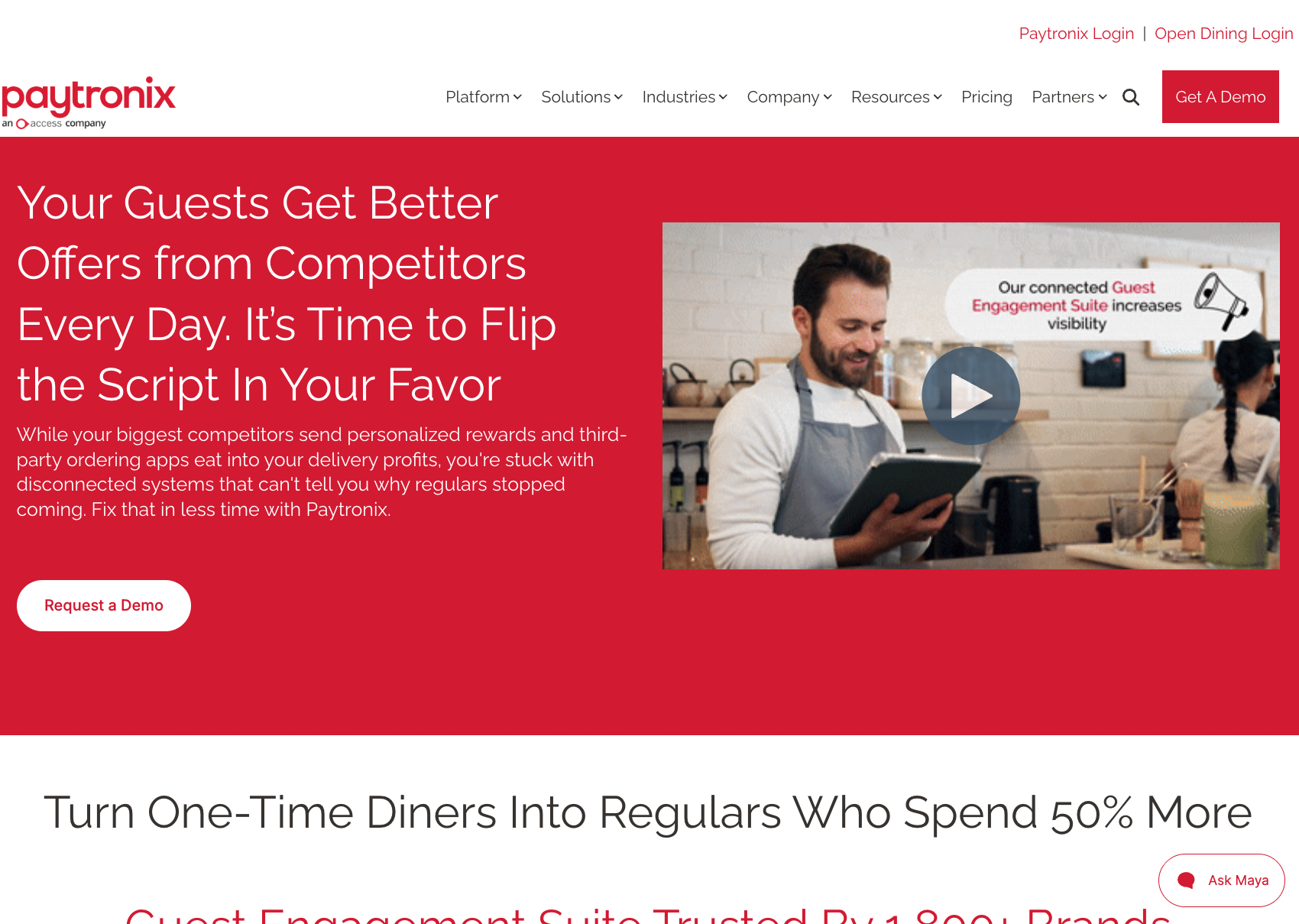
Paytronix
Paytronix is oriented toward full-service and casual dining enterprise operators, C-store brands, and franchise groups with significant gift card and stored value programs, while Punchh is now part of PAR Technology following its 2021 acquisition and its integration is tightly aligned with that ecosystem. If gift card accounting across hundreds of franchise locations is a primary requirement, Paytronix has built more depth there than most competitors. If your brand operates at a national scale, needs the ability to coordinate CRM across digital channels, and wants structured systems and process support for multi-unit restaurant chains, Paytronix is often the better fit; for independent restaurants or small operators, the total cost of ownership, internal team demands, and enterprise-level technology can be more than most restaurants need.
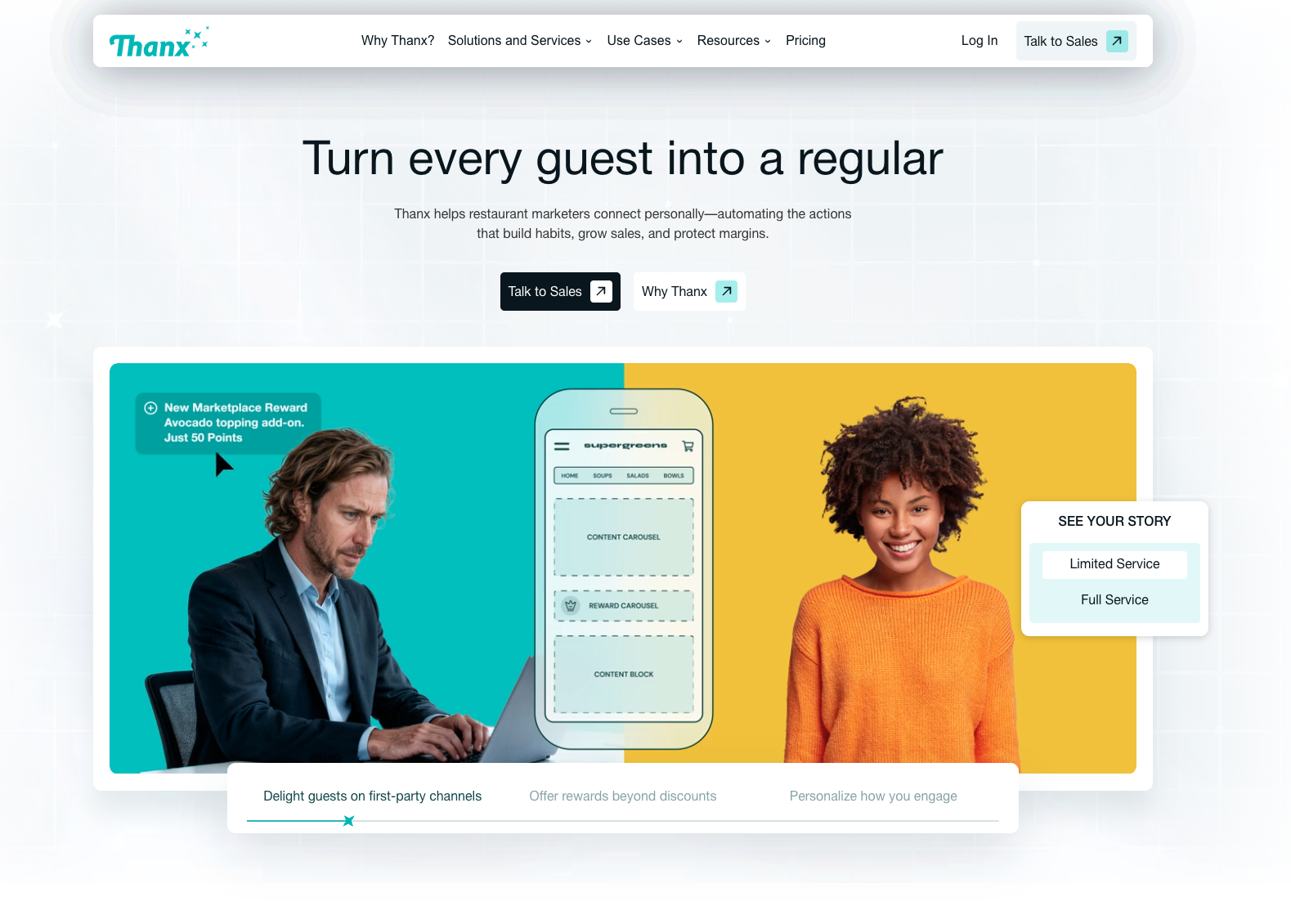
Thanx
Thanx is purpose-built for multi-location operators across fast casual, QSR, and table service who want modern self-serve marketing tools, fast time to launch, and proof that loyalty is actually driving incremental visits. It fits brands that have outgrown basic programs and need attribution, not just engagement metrics.
Request a demo to see how Thanx works for your brand.
Personalization, CRM & Customer experience
Punchh
Punchh offers CRM and segmentation tools at an enterprise level. Since PAR Technology's 2021 acquisition, some operators have reported a decline in product quality and responsiveness — a pattern that shows up in competitive deal notes and public reviews.
Paytronix
Paytronix has the ability to handle CRM and segmentation at enterprise scale. Its platform-driven guest intelligence tools help identify engaged guests and keep a clear focus on targeting marketing efforts around personalized experiences, customer relationships, and the broader customer experience. The trade-off is that, while this depth can support the guest experience, most program modifications still require vendor involvement and change fees, which slow execution.
Thanx
SegmentAI lets marketers describe their target audience in plain English and builds the segment in seconds, drawing on 400+ guest attributes and 100+ pre-built segments. No SQL. No IT ticket. Campaigns that used to take days take minutes. Thanx customers report a 95% reduction in campaign execution time with SegmentAI.
Mobile & online ordering
Punchh
Punchh is app-centric. Guests join through a mobile app download, which limits reach to the subset of guests willing to complete that step. It integrates with ordering platforms but doesn't own the ordering experience.
Paytronix
Paytronix offers an all-in-one engagement platform bundling loyalty, CRM, online ordering, payments, app-based rewards, gift card wallet, and stored value management. That stack supports customer experience across digital channels and can help drive repeat visits by improving the guest experience and encouraging repeat visits. For operators whose programs are built around gift card issuance and redemption at scale, this is a genuine differentiator.
Thanx
Thanx removes the app download requirement entirely. Guests enroll via QR code at the POS, SMS at checkout, or web at the point of ordering. The result: 263% more sign-ups than legacy platforms. Thanx also offers a fully branded mobile app and web ordering experience with a 96% cart conversion rate. Operators update the app themselves in minutes via a self-serve CMS, without a third-party agency or developer.
Request a demo to see how Thanx works for your brand.
Integrations
Punchh
Punchh has a broad integration network built over many years, connecting with major pos systems, online ordering platforms, and third-party tools across restaurant systems, with particular depth in QSR environments and the NCR/Aloha ecosystem; this technology posture is especially aligned with PAR Technology's ecosystem.
Paytronix
Paytronix covers a wide range of FSR and C-store integrations, with over 450 systems, including POS systems and CRM, reflecting the kind of restaurant technology depth needed in complex casual dining environments.
Thanx
Thanx has 60+ integrations, including Toast, Olo, Aloha, Brink, Square, Qu, Revel, Klaviyo, PAR, Flybuy, Ovation, and Deliverect. The platform is SOC 2 Type 2 and PCI DSS Level 1 certified, with developer-friendly APIs and full data portability. Operators own their guest data — on day one and on exit.
Automation/ROI
Punchh
Punchh offers campaign automation and standard reporting. Proving that a campaign drove incremental visits — versus rewarding guests who'd have come back regardless — is not a built-in capability.
Paytronix
Paytronix includes campaign automation and segmentation marketing tools. Attribution methodology isn't transparent, and change fees mean operators hesitate to test and iterate, which limits the compounding value of optimization over time.
Thanx
Every Thanx campaign can run against a holdout control group, so operators see the real incremental lift — not just activity. This is how Sonny's BBQ cut its effective discount rate from 10% to under 1% while growing habitual guests by 42%. It's also how Hopdoddy A/B tested two reward types and found that shakes drove 33% more revenue than fries at a 2% discount rate. When you can test and prove what works, you iterate faster and spend less on rewards that don't move behavior.
Request a demo to see how Thanx works for your brand.
Pricing
Punchh
Not publicly available. Punchh operates on multi-year enterprise contracts. Like many enterprise loyalty platforms, pricing typically requires custom pricing negotiations and significant minimum commitments in duration and volume. Pricing is negotiated based on brand size, configuration, and the total cost of ownership, including platform fees, implementation, ongoing account management, and the internal team needed to run the program effectively.
Paytronix
Not publicly available. Enterprise loyalty platforms like Paytronix usually involve custom pricing negotiations and significant minimum commitments in both term length and volume. Paytronix also uses enterprise contracts, and the platform is specifically known for incremental change fees when operators want to modify earn rules, tiers, or redemption structures after launch, so the total cost of ownership depends on the implementation process, account support, and the internal team—not just software fees alone.
Thanx
Not publicly available. Pricing is based on location count and average unit volume. There are no change fees — operators modify programs whenever they need to.
Why successful restaurants choose Thanx
Both Punchh and Paytronix, leading enterprise-grade loyalty platforms, are built on the same premise: loyalty as a feature-rich program for your most loyal guests. The problem is that your most loyal guests are already coming back. What they can't help with is proving that the program changed anyone's behavior, or reaching the 80%+ of guests who never enrolled in the first place.
Thanx takes a different approach. The platform is built around three questions every operator should be able to answer in operationally demanding businesses: Are you reaching enough more guests and keeping guests coming back? Are they actually changing their behavior to drive repeat visits through better customer experience and personalized experiences that strengthen customer relationships and increase repeat visits? And is the program paying for itself without eroding your margins?
The results across Thanx brands show what's possible: loyalty programs can lift customer engagement by about 20%, loyalty members visit 18% more often, and the right platform can increase customer value by 23% while driving up to 20% higher revenue per customer.
- Hopdoddy saw 5x sign-ups in year one after switching from Paytronix. The prior platform was capturing a fraction of those who were actually visiting.
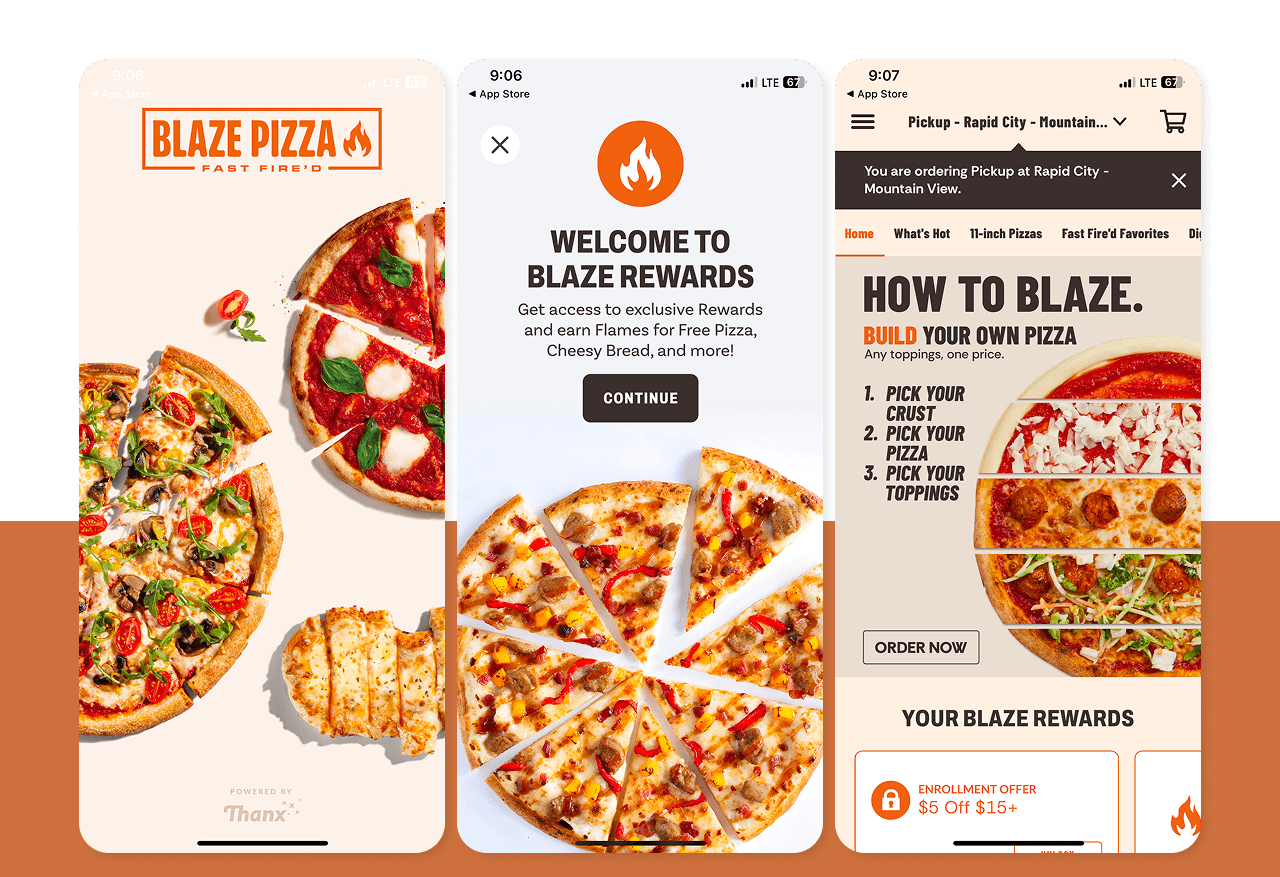
- Blaze Pizza (~300 locations) switched from Punchh in April 2025. Huddle House (~300 locations) switched from Paytronix.
- Nothing Bundt Cakes (~750 locations) launched their first-ever loyalty program on Thanx in September 2024.
- Pokeworks grew its loyalty program 4x faster in 2025 than the year prior, and recorded 14% same-store sales in July 2025, more than 13 points above the fast-casual industry average that month (QSR Magazine, Sep 2025).
"For the first time, we're able to reward guests without always giving away margin. That's a big win for us, and for our operators." — Katie Love, CMO, Sonny's BBQ
Thanx processes ~$1B/year in digital sales, has completed 75 loyalty transitions in the last 3 years, and averages 87 days from contract to launch with a 4-hour average support response time.
If you're evaluating Punchh or Paytronix and want to see what a platform built around frequency and measurable ROI looks like, the next step is a demo.
Request a demo to see how Thanx works for your brand.

.png)



.avif)
.avif)