
Real loyalty ROI is earned when customers visit more often, spend more, and shift to higher-margin direct channels—not when you subsidize trips with blanket discounts.
Turn loyalty into your highest-margin revenue channel.
Thanx Pricing
.avif)

Thanx helps drive high-margin growth
90%
Of customers grow digital sales in first year on Thanx
5x
Average growth in engaged guests in first year on Thanx
2.4%
Average discount rate (down from ~10%) on Thanx
REAL RESULTS
Enterprise solutions built for restaurants

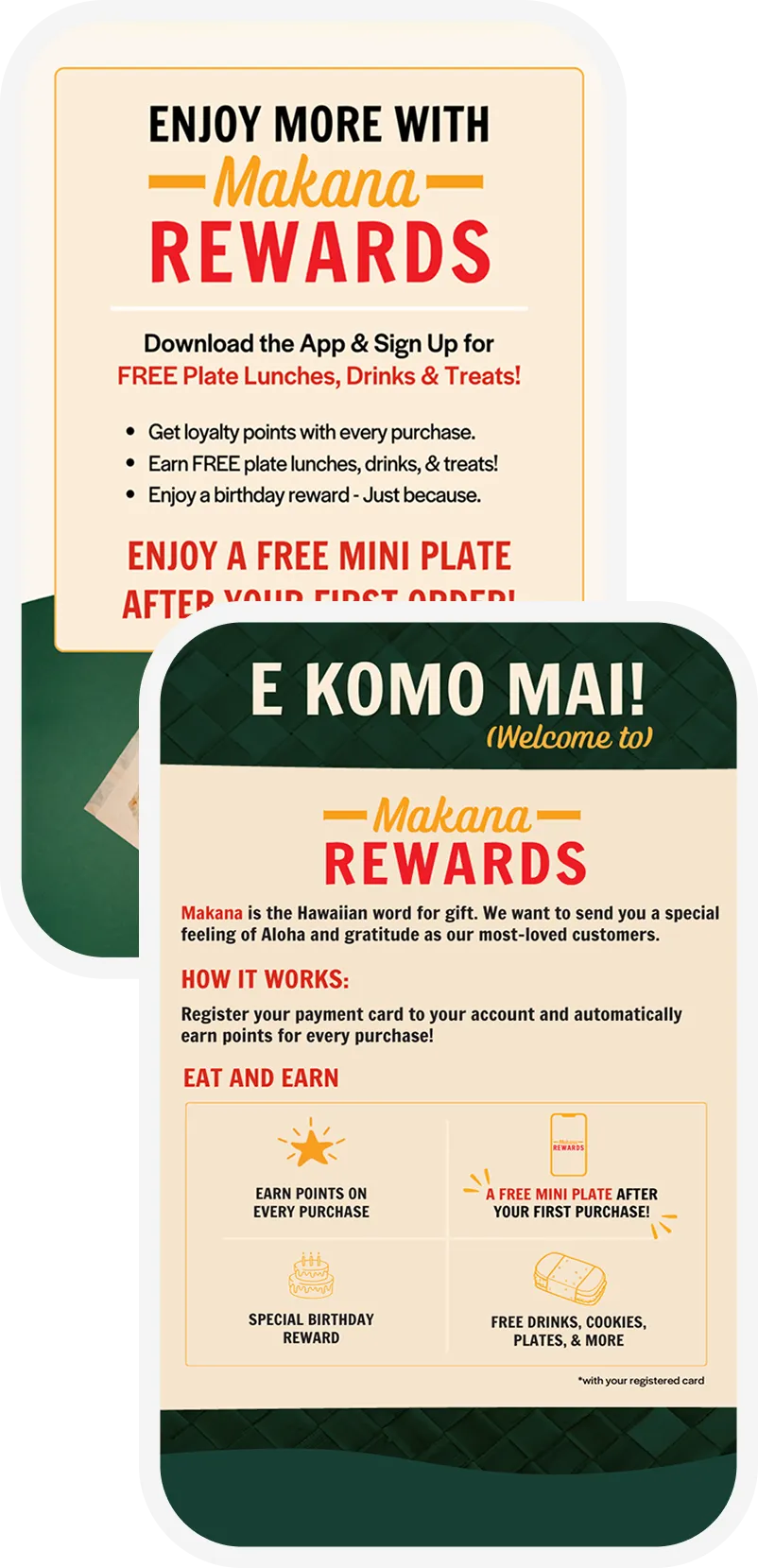
Thanx is an elevated product. With technology, you get what you pay for. The cost of Thanx is more than justified by the impact on sales, the incremental traffic, and the seamlessness of the guest experience. If you go with a low-cost solution, you better have a good IT team who can spend all of their time making it a seamless experience. That’s why Thanx is worth the premium price.
Rob Ertmann, CEO | Mo’Bettahs
30%
Increase in membership in year one
30%
Increase in digital sales
7
Months of positive SSS comps (and ongoing)
Next up: Fast Casual

.avif)
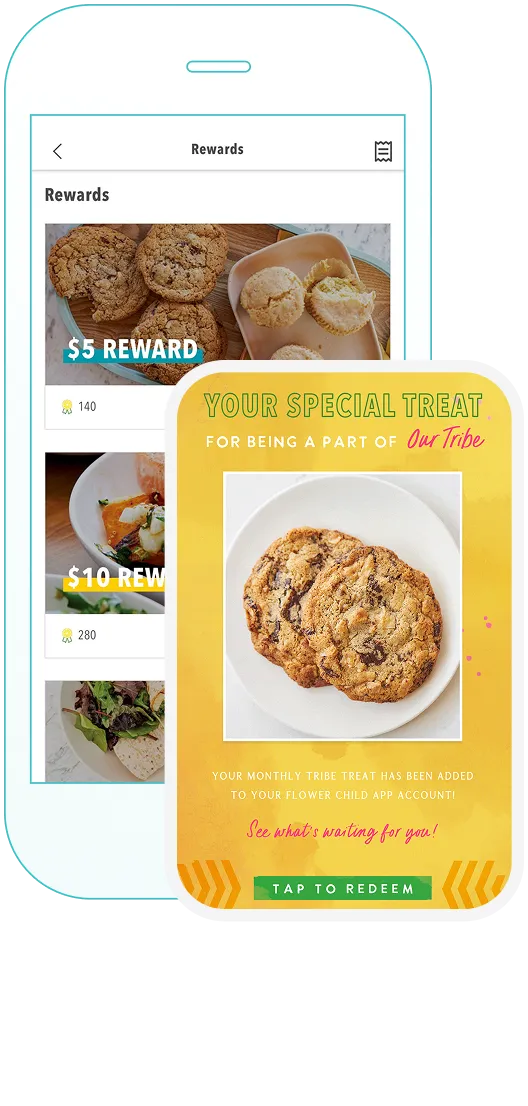
We thoroughly evaluated top-tier programs, like Starbucks & Sweetgreen, and engaged with every loyalty provider in the market. We contemplated investing millions in the most costly solution, but it offered nothing beyond what Thanx already provides. We couldn’t be happier with our decision.
Anita Walker, Chief Marketing Officer | Flower Child (Fox Restaurant Concepts)
350%
Active membership growth in first 5 months
210k
Total enrollment in first 90 days
1,600
Sign-ups / loc / mo
Next up: Table Service

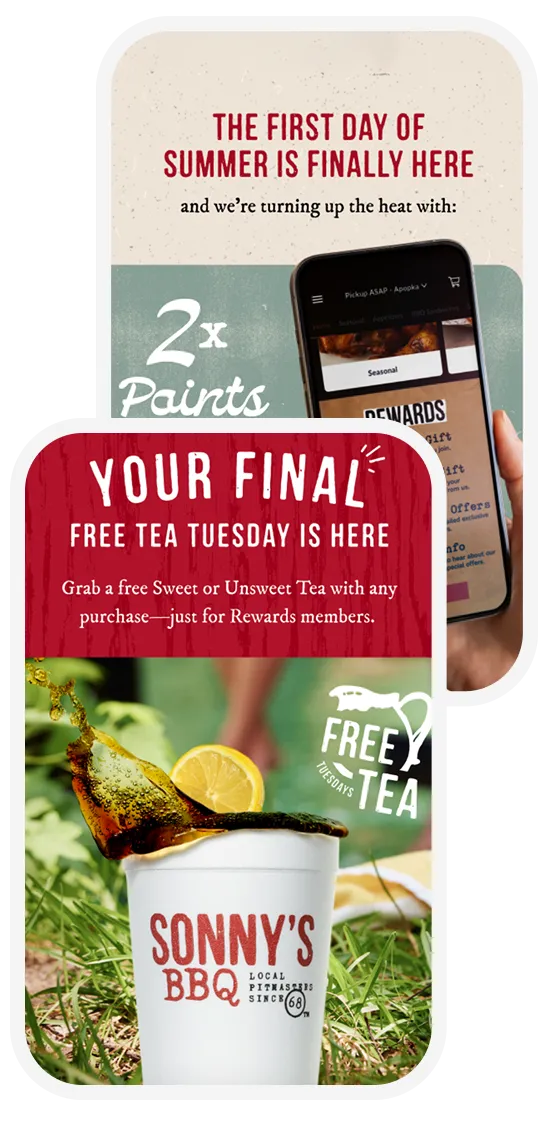
Sweet Tea Tuesdays are the perfect example of a high-impact campaign—our franchisees love it because it costs us pennies but gets people in the door. We needed options that were high perceived value and low operational cost.
Katie Love, VP of Marketing, Sonny’s BBQ
4x
Increase in membership in the first 7 months
10% to 1%
Effective Discount Rate
Reduction
Reduction
42%
Growth in Habitual Guests
Next up: Coffee & Treat

A loyalty program just turns into a discount program unless you first understand guest behavior. With The Velvet Room, powered by Thanx, we are using data to build personal relationships with our guests, not just with typical rewards, but with memorable experiences.
Cassie Cooper, Director of Marketing | Velvet Taco
Participation rate tied to weekly revenue
13%
Tier upgrade from a single hidden menu campaign
+5k
Average weekly sign-ups
Next up: Quick Service


.svg)
LOYALTY EVALUATION
Is your restaurant growing frequency or driving discounts?
Loyalty Capture Rate
Third time purchasers
Digital sales
Discount rate
Engaged users
Total ROI

Loyalty Capture Rate
25-50%+ (up to 70% for coffee!)
Third time purchasers
155%
Digital sales
10-15% more items in cart
Discount rate
2.4%
Engaged users
5x in year one
Legacy loyalty
Loyalty Capture Rate
10-15%
Third time purchasers
Flat
Digital sales
Flat
Discount rate
10%
Engaged users
Flat
Bleeding discounts, declining sales
When your program only reaches superfans and digital channels underperform, blanket discounts become the default. Costs pile up while revenue and savings opportunities feel out of reach.
%20(1).avif)
Frequently Asked Questions
Answers to your most common questions.
What are the primary drivers of ROI in a restaurant loyalty program?
Loyalty program ROI fundamentally comes down to changing customer behavior to drive sustainable frequency increases. The biggest drivers are frequency and spend lift from regulars, growth in the total number of new members who become active in the program, and first-party digital revenue that carries higher margins than third-party channels.
But that’s not all. ROI isn't just about what you gain—it's equally about what you save. The cost of discounts is the single largest loyalty program expense, and it scales with how dependent your program is on blanket offers to drive visits. Programs that rely on broad-based promotions to generate activity often show engagement without profitability.
Beyond discount costs, consider savings from reduced third-party commissions (as you shift sales to owned channels), eliminating the need for a custom app and ongoing agency costs, and staff productivity from automating manual marketing work. A program that appears to drive visits while eroding 8-10 margin points through excessive discounts isn't driving ROI—it's subsidizing behavior you may have gotten anyway.
What are the biggest cost drivers when managing a loyalty program?
The largest cost is the discounts you offer to customers. This is determined by three factors: how many blanket offers you're distributing, how dependent you are on those offers to drive frequency (versus building genuine habits), and how precisely you're targeting rewards to your highest-value customers. A program that gives away 10% in discounts can easily offset the revenue benefits of increased frequency, especially if those discounts are going to customers who would have visited anyway.
The principle here is simple but often ignored: not all customers are created equal. Companies that offer average-value rewards to everyone waste resources over-satisfying less profitable customers while under-satisfying their most valuable guests. The most profitable programs share value with customers who create value—rewarding behavior that drives sustainable frequency, not just incentivizing one-time transactions.
Beyond discounts, the second-biggest cost is paying for a custom loyalty app and the ongoing agency fees to manage it. If your loyalty program requires custom app development, continuous maintenance from developers, or outsourcing campaign execution because the tools are too complex, those costs compound quickly. Other expenses—staff time on manual segmentation, training employees on clunky enrollment processes, platform fees, and high-volume communications—add up, but they pale in comparison to poorly managed discount rates.
How should I compare the cost of different restaurant loyalty solutions?
You can't evaluate loyalty platforms by subscription fees alone—that's a fraction of the true cost. The critical question is: what's the three-year total cost of ownership, including discount dependency, custom app and agency costs, and ongoing operational overhead?
Start with the economic fundamentals. A rewards program should not give something for nothing—the value created must exceed the cost of value delivered. That means understanding the links between what you give customers and what they get back in changed behavior. If a platform requires 8-10% in discounts to function, you need to ask whether those discounts are driving incremental frequency or just subsidizing visits you would have captured anyway. Compare that to platforms designed for precision targeting, where discount rates run closer to 2-4%.
Next, factor in the cost of building and maintaining a custom app, plus ongoing agency fees if you're outsourcing marketing execution. A "cheaper" platform that forces you to pay for custom development and agency support may cost more over three years than an all-in-one solution with a higher platform fee. Finally, consider the hidden cost of manual work—how many hours go into building segments, launching campaigns, and managing disconnected systems?
The lowest subscription fee often comes with the highest total cost. Evaluate platforms based on how they help you reward desirable behavior efficiently, target attractive customer segments, and create long-term value for your most valuable guests—not how cheaply they can enroll members.
How does Thanx pricing work for multi-location restaurant brands?
Thanx pricing is designed to scale with your business and deliver strong ROI from day one. Our enterprise solutions are built specifically for multi-location food service brands, with pricing based on factors like restaurant count, average unit volume, and the platform capabilities you need—from loyalty and CRM to digital ordering and marketing automation.
We focus on transparent, outcome-based pricing that aligns with your growth. Most Thanx customers see $200K+ in revenue opportunity per location annually (based on a $2M AUV restaurant), driven by engaged guests who spend 10x more than unengaged guests and a ~2% same-store sales lift. To discuss pricing tailored to your brand, schedule a demo with our team.
What kind of ROI should I expect from a restaurant loyalty program?
The best restaurant loyalty programs take a long-term perspective—the full potential of value sharing through rewards is realized only when customers change their habits to become sustainably loyal. That shift happens when you've built a program that clearly delivers ongoing benefits, not just transactional rewards.
With Thanx, restaurants typically see 5x growth in engaged users in year one, with engaged guests spending 10x more than unengaged guests. Digital sales grow for 90% of brands in the first year—50% see digital revenue increase by more than 50%. The Thanx average discount rate of 2.4% (versus ~10% for legacy platforms) means you're protecting 7.6 margin points on loyalty-attributed sales while still driving frequency. When you add savings from reduced third-party commissions and eliminating custom app and agency costs, the typical Thanx customer (based on a $2M AUV restaurant) sees $200K+ in revenue opportunity per location annually.
But ROI isn't just about the numbers—it's about building habits at scale without expanding your team. A well-designed program should reward desirable customer behavior, target your most valuable segments, and give you the tools to monitor economics and adjust as needed. If your current program requires constant manual work to build segments and launch campaigns, or if you don't know whether it's actually driving incremental frequency, you're missing the core promise of loyalty: sustainable, profitable growth driven by behavior change.
.avif)