

.avif)

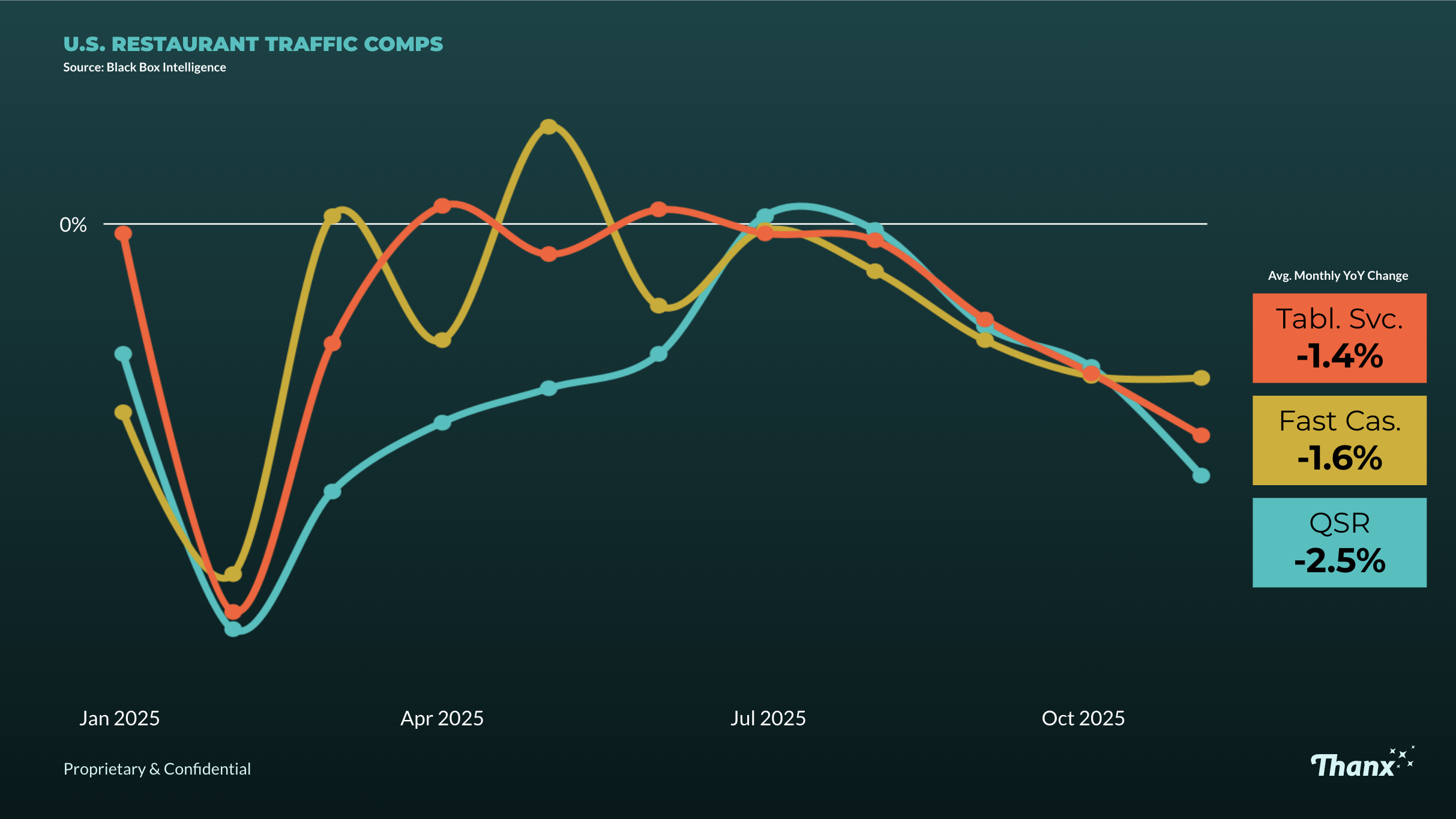
The U.S. restaurant industry is estimated at $1.5 trillion, yet traffic is declining across nearly every segment. Third-party delivery is taking share from restaurant direct revenue at an increasingly fast rate. Driving guests back into your restaurant, profitably, is hard. Here's what the brands actually growing traffic are doing differently.
Every week, our customer success team sits down with restaurant brands, from fast-casual to full-service, 5 locations to 1000+, and talks through what's working in their loyalty programs. After analyzing six months of these strategy conversations, clear patterns emerged. The same strategies kept surfacing across brands that are growing traffic while the rest of the industry trends down.
Here's what we found.
1. Stop Thinking About Loyalty as a Program. Think About It as a Business Outcome.
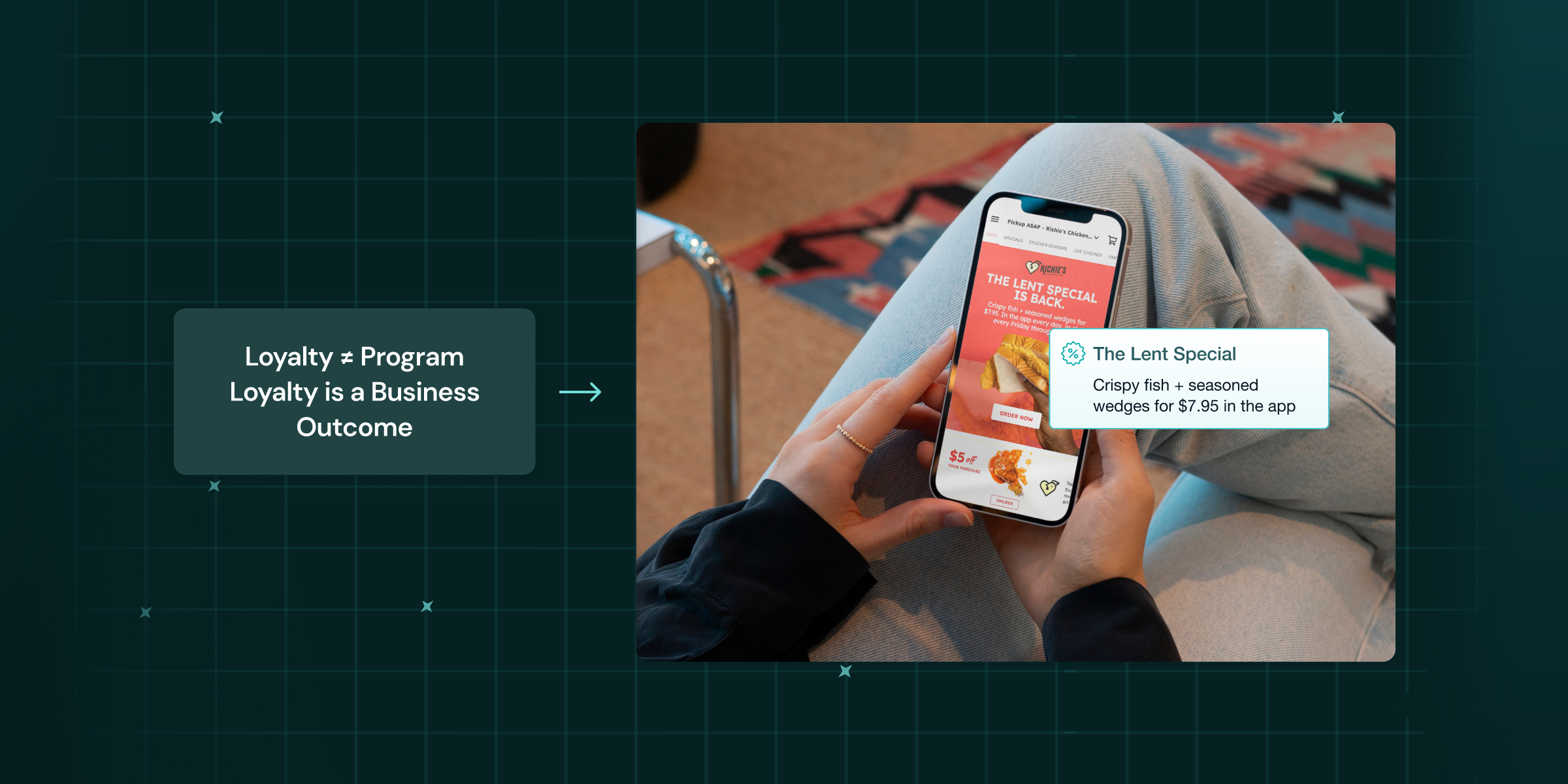
The brands seeing the strongest results don't treat loyalty as a standalone rewards program. They treat it as the engine behind a business outcome: driving guest frequency profitably.
That distinction changes everything. It shifts the conversation from "what discount should we offer?" to "how do we get a first-time guest to come back a third time?", which is where the real revenue impact lives. A loyalty program isn't going to beat out food quality 100% of the time. It's not going to beat out convenience 100% of the time. It's a thumb on the scale, slightly influencing guest behavior in your favor. But if you slightly influence enough times, you create habit. And habit becomes an excellent driver of repeat purchasing.
Why the third visit matters: Across our merchant base, the lifetime value of a guest increases 10x once they make a third purchase. An engaged guest, someone who has made at least one purchase in the last 90 days and at least three purchases all-time, is worth dramatically more than a one-time visitor. If that number is going up, so will your same-store sales. Our benchmark activation rate for getting guests to that third visit is 32%, compared to an industry standard of just 9%.
The brands that internalize this build every campaign, every reward, and every automation around moving guests through the activation funnel.
2. Win the Value Equation by Removing Friction
There's an equation at the heart of every loyalty program: what a guest has to give you versus what they get back.
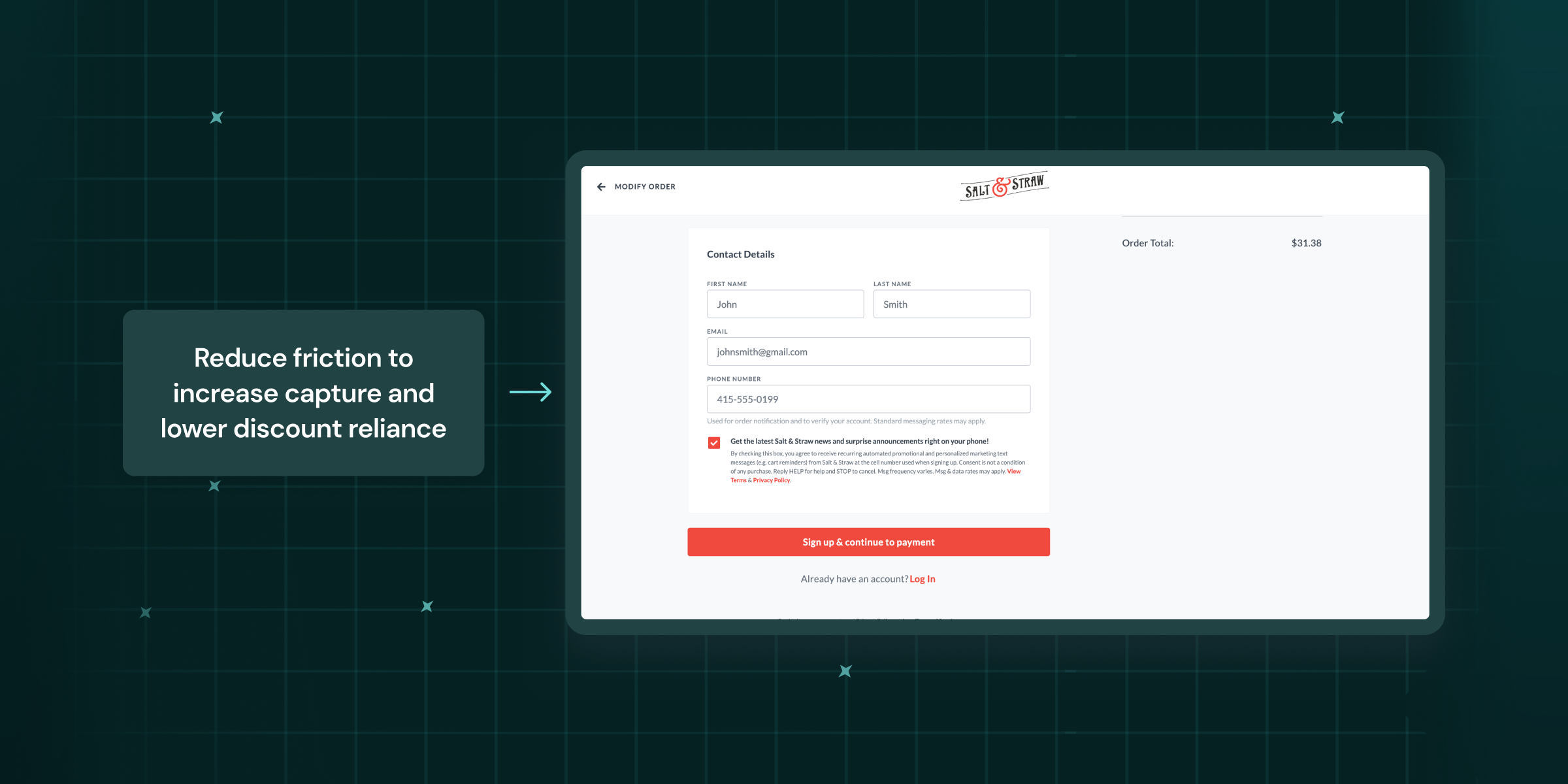
Legacy programs ask for a lot: a phone number at the counter, an email, a separate app download. If the friction to participate in the program is high, the only way to get people to participate is to give them more money. That's why discount rates on legacy platforms tend to be so difficult to manage. Friction can be the root cause of discount dependency, not always program design choices.
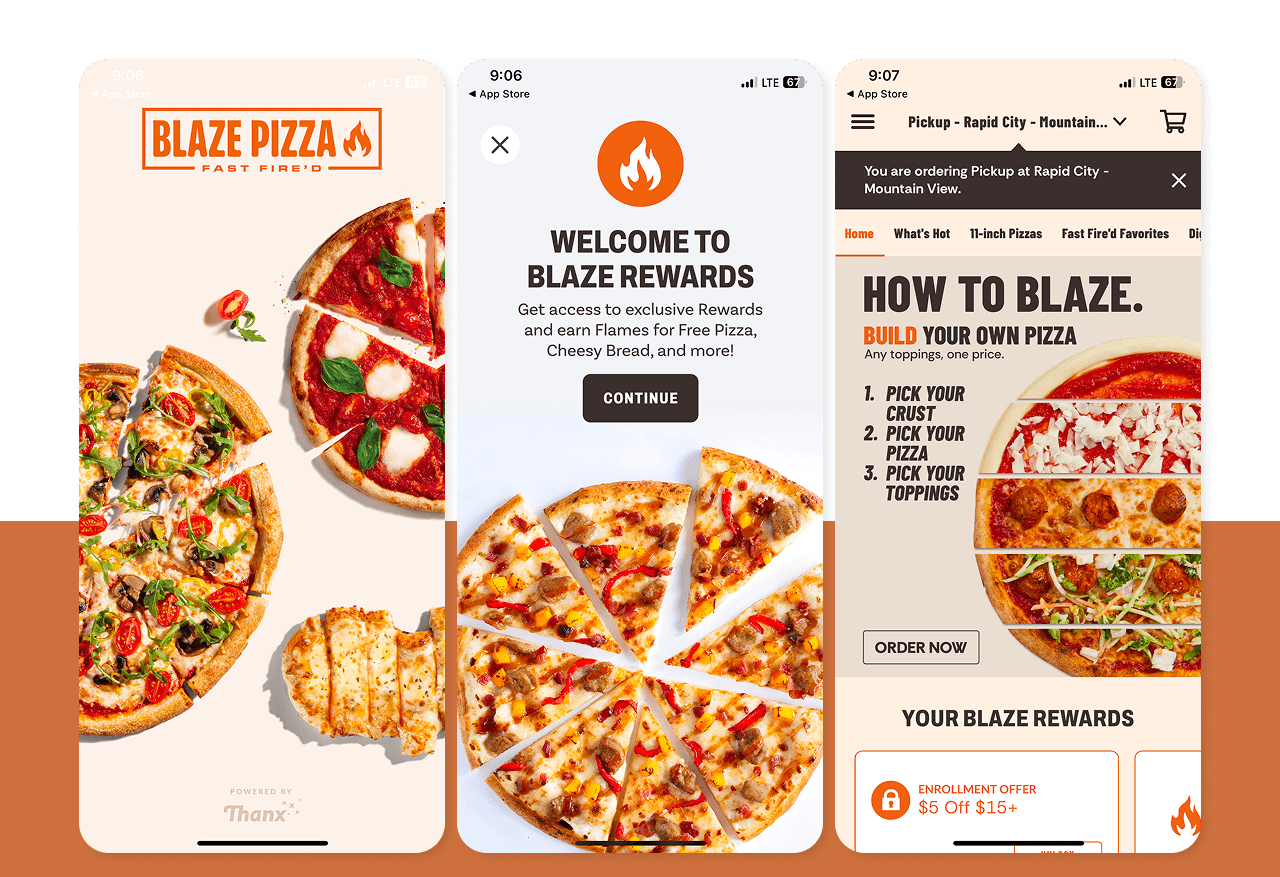
The brands with the strongest capture rates flip this equation entirely. When your digital guests are automatically enrolled in loyalty and in-store guests can sign up natively on the guest facing display, the burden on the guest is minimal. That means you can give them a smaller reward, like a surprise menu item, bonus points, or early access, and it feels valuable. Make the process of participating easier, and you don't have to give as much in the way of discounts to get participation. We've seen brands slash their discount rates by as much as 80% after making this shift.
The benchmark that matters most: Your revenue capture rate, the percentage of total revenue coming from identified loyalty members. We see high-performing brands hit 30-40%, with the best in class reaching 75%. If you're below 10%, the best marketing in the world is only reaching a sliver of your guests. And that matters more than ever, because 80% of your revenue comes from 20% of your guests. You must know them, and you must speak to them personally. You can't do that if they're ordering through a third-party marketplace instead of your direct channels.
One brand went from a 3.6% capture rate to 15% on day one simply by auto-enrolling digital orders. That's not incremental improvement. That's a fundamentally different marketing capability.
When brands transition to a lower-friction program, capture rates spike within 60 days. People generally ask, "how many of my loyalty members am I going to lose in a transition?" We see it the opposite way. You never convert the zombies sitting in your old program who aren't purchasing. But your active user count is up 2x or more within 60 days.
3. Design Rewards for Behavior Change, Not Blanket Discounts
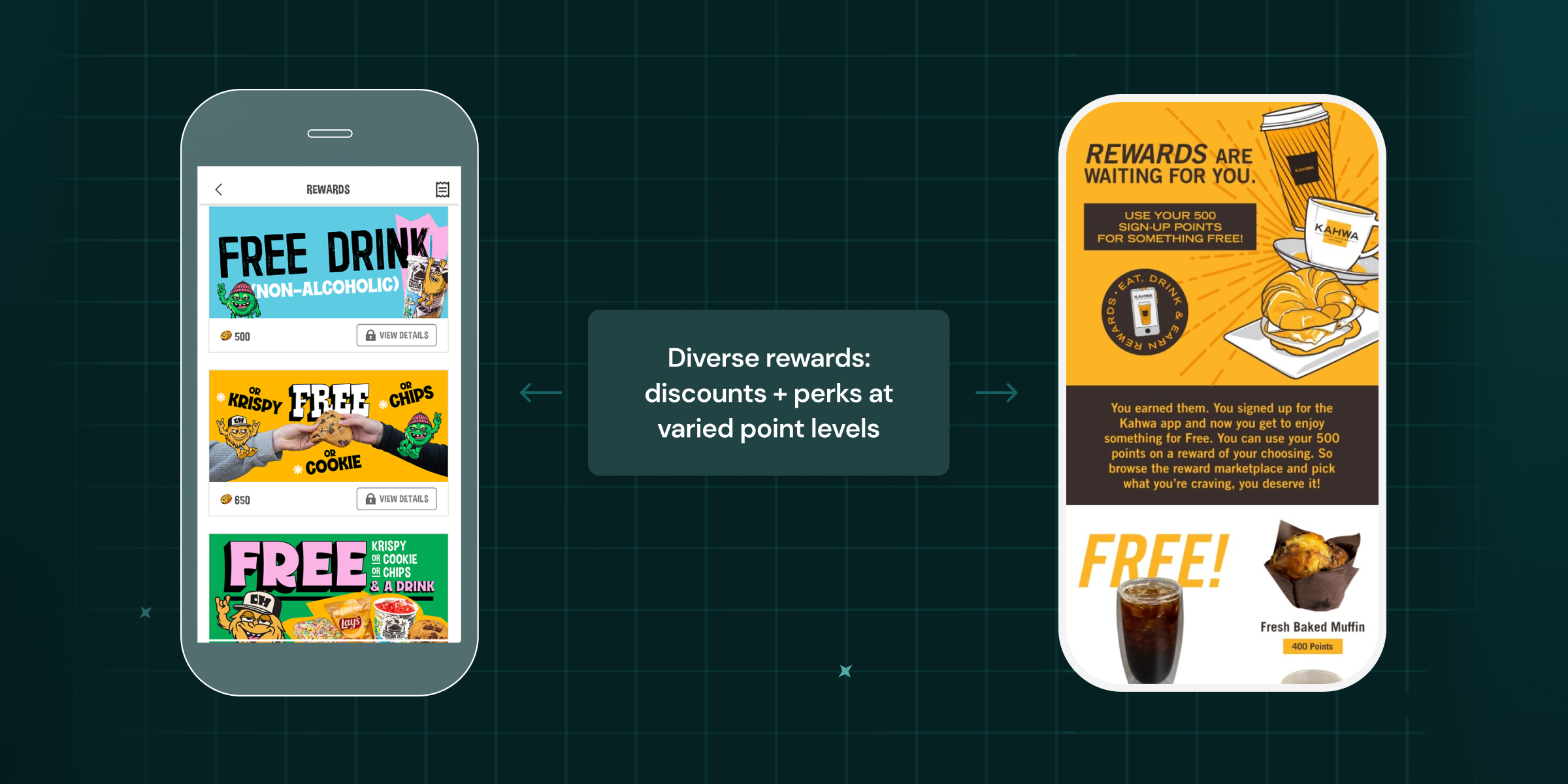
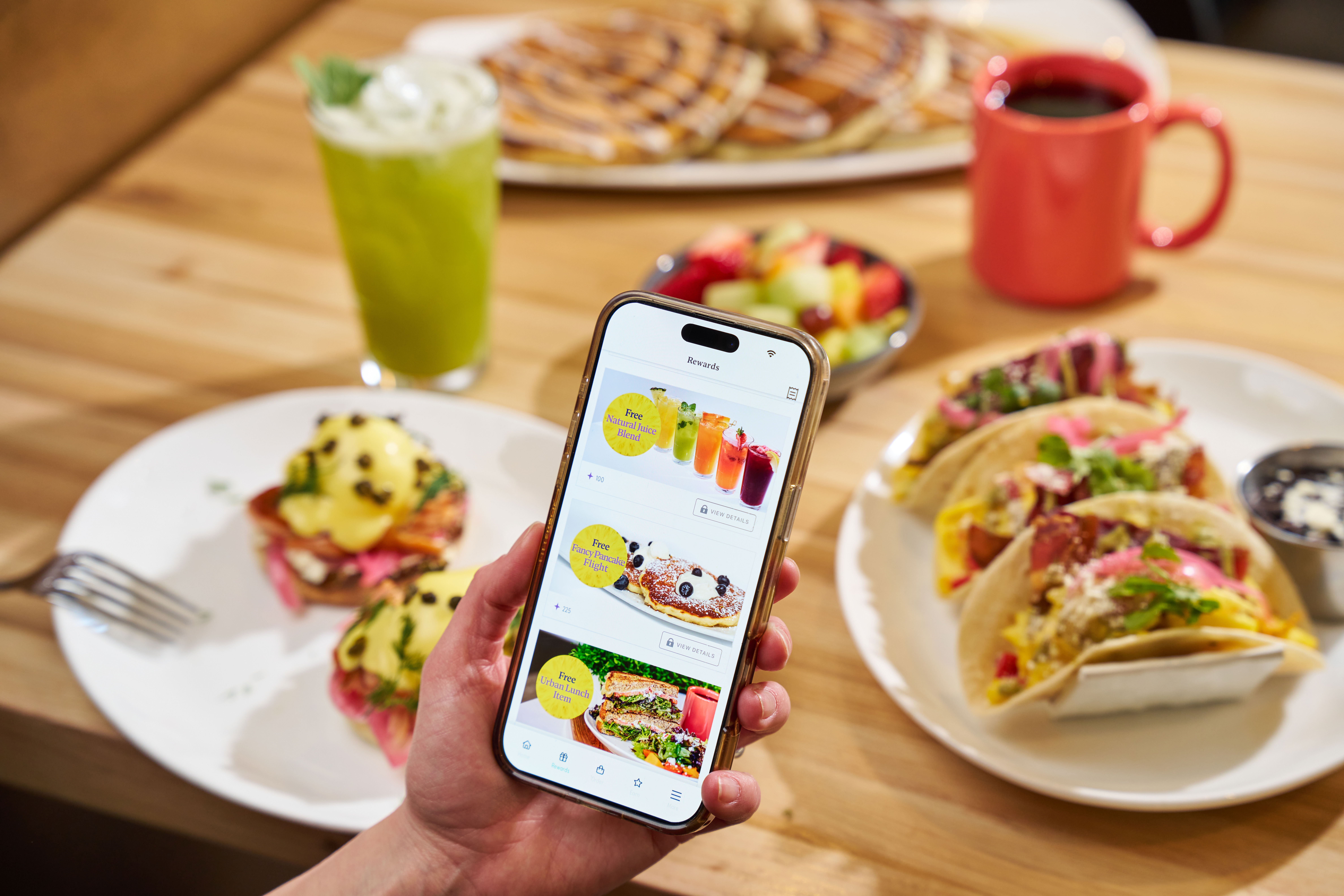
The most successful reward strategies we see follow a consistent pattern: offer a diverse marketplace of rewards at different point values, mixing discount rewards with non-discount perks.
What the best brands include in their rewards marketplace:
- Low-cost, high-frequency items (free drink, free side) at low point values. Your margin is excellent, and guests love the feeling of frequent redemption
- Signature or hero menu items at mid-tier point values. Reinforces brand identity
- Non-discount rewards like secret menus, early access to LTOs, branded merchandise, or VIP event access. These drive aspirational engagement without touching your margins
- Seasonal and limited-time rewards that rotate quarterly to keep the marketplace feeling fresh
One brand put custom-designed merchandise like water bottles and shirts as high-tier marketplace rewards. The items themselves weren't expensive, but the exclusivity of earning them through points created genuine excitement and gave guests something to aspire to.
Another ran a challenge where guests who purchased a specific item four times in a month unlocked access to a secret menu the following month. They cleared excess inventory, drove frequency, and didn't discount a single item.
The key insight: When you reduce the friction to participate, you don't need to give away margin to drive behavior. Guests are voting with their dollars, and they often prefer access and status over discounts.
.png)
4. Build a Lifecycle Marketing Engine (Not One-Off Campaigns)
The brands with the healthiest programs don't rely on ad hoc campaigns only. They build an automated lifecycle engine that runs in the background, targeting guests at the moments that matter.
The baseline automations every program should have running:
- Welcome series. Introduce new members to the program, explain how to earn and redeem, and highlight the value proposition. Don't just send one email. Build a sequence that nurtures through the first few weeks.
- Activation campaigns. Target guests who haven't made a second purchase after 14, 30, or 60 days. Then target those who haven't made a third. This is your highest-ROI campaign work.
- Birthday reward. Simple, expected, and effective. Most successful programs include it.
- Abandoned cart. Target guests who left items in their digital cart 24 hours later. Multiple brands have found that a simple nudge with no reward attached outperforms discounted variants.
- Point balance reminders. Use merge tags to show guests their current points balance at the top of campaign emails. When guests see they're close to unlocking a reward, it drives action.
- Win-back campaigns. Target lapsed guests with escalating urgency (more on this below).
The key is that once these are set up, they run continuously. Every new guest that enters your program gets the right message at the right time without anyone pressing "send."
5. Rethink Your Win-Back Strategy
Win-back campaigns are where we see the widest gap between what brands do and what actually works.
What most brands do: Send a blanket "We miss you!" email to everyone who hasn't visited in 30 or 60 days, usually with a discount attached.
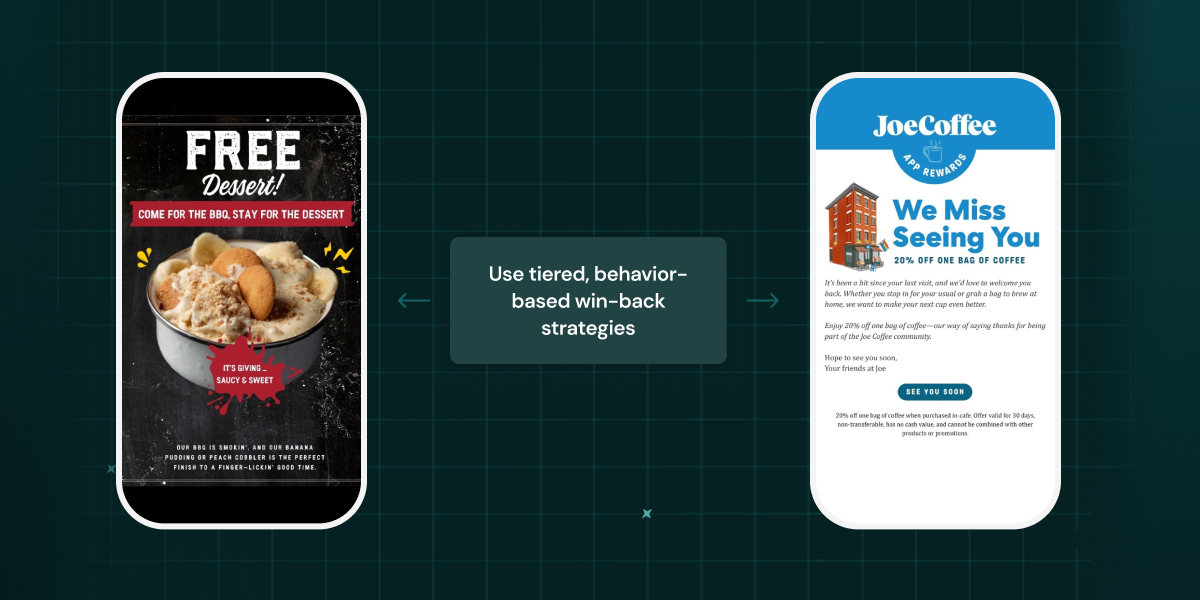
What the best brands do: They take a tiered, behavior-based approach.
Segment by guest value, not just recency. There's a critical distinction between a "bounced" guest (made one or two purchases but never activated) and a "churned" guest (was once a regular who stopped coming). These are fundamentally different problems requiring different strategies:
- Bounced guests need to be activated. Often messaging about the program's value and a nudge back to make that next purchase is enough
- Churned guests need to be won back. They already know your brand, so the question is why they stopped coming
Escalate your approach over time:
- 30 days inactive: Messaging only. A friendly reminder, maybe highlighting a new menu item or their point balance. No reward needed.
- 60 days inactive: Introduce a small incentive. A modest reward to nudge them back.
- 90-120 days inactive: Richer offer. This is where you invest because these are guests who were once valuable.
Customize your approach: Instead of using a flat "hasn't visited in X days" trigger, segment lapsed guests by their established cadence. A guest who normally visits every 60 days shouldn't get a win-back message at 30 days. That's their normal pattern. But a guest who visited weekly and hasn't been back in 30 days is genuinely lapsing. Matching your triggers to individual behavior dramatically improves relevance.
A tactical detail that matters: When offering win-back rewards, use time-limited dollar-off or item-based rewards rather than bonus points. Points sit in an account with no expiration urgency. A "$5 off, expires in 14 days" reward creates a reason to visit now.
6. Use Challenges to Drive Frequency During Slow Periods
Challenges are one of the most underutilized tools we see, and one of the most effective for brands that embrace them.
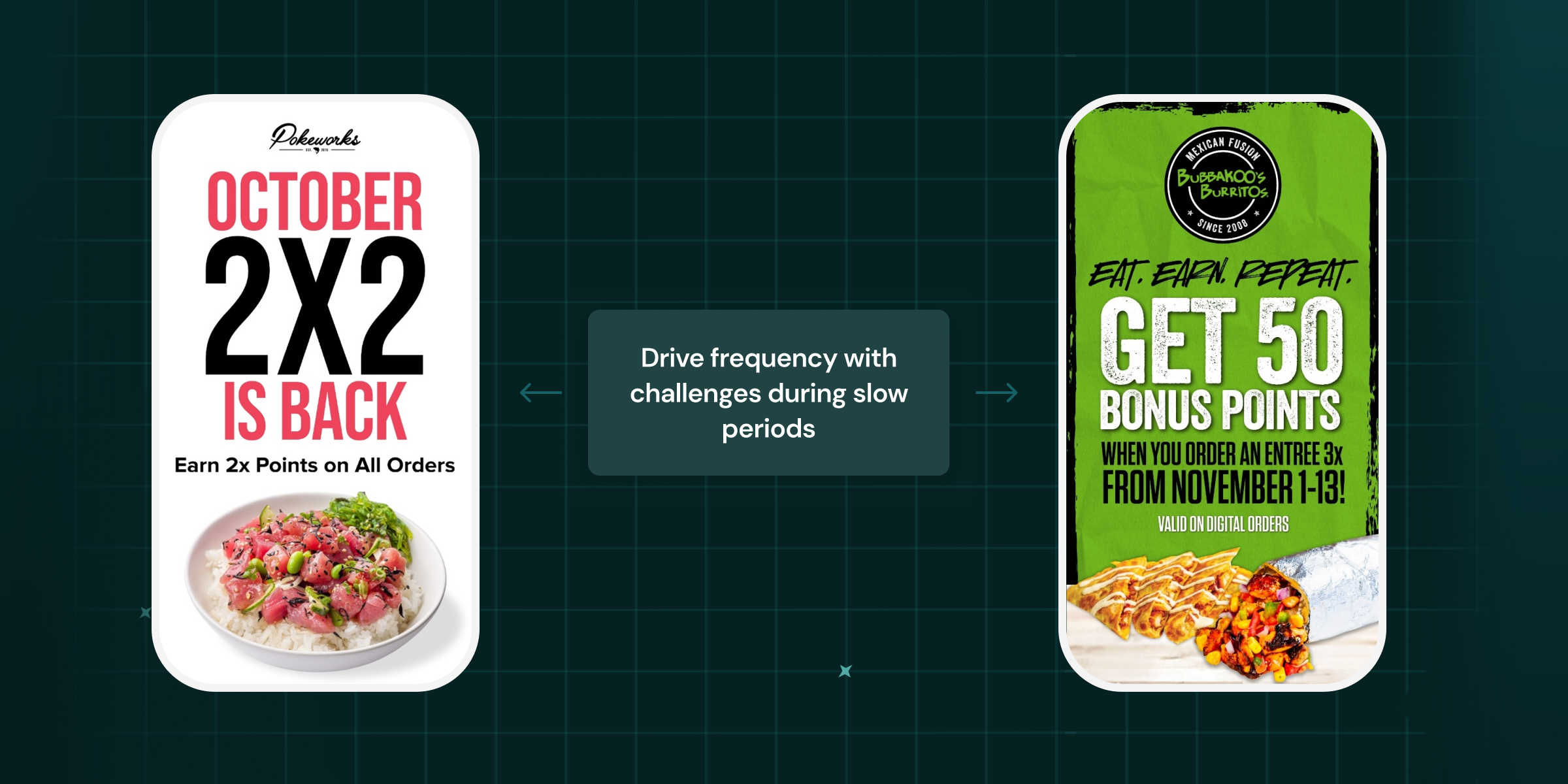
The simplest format that works: "Visit 3 times in the month of [slow month] and earn 200 bonus points."
The setup is straightforward: announce the challenge via a targeted campaign, then set up automated messages as guests make progress (one purchase down, two to go... two down, one to go... congratulations, here's your reward).
Other formats we see working well:
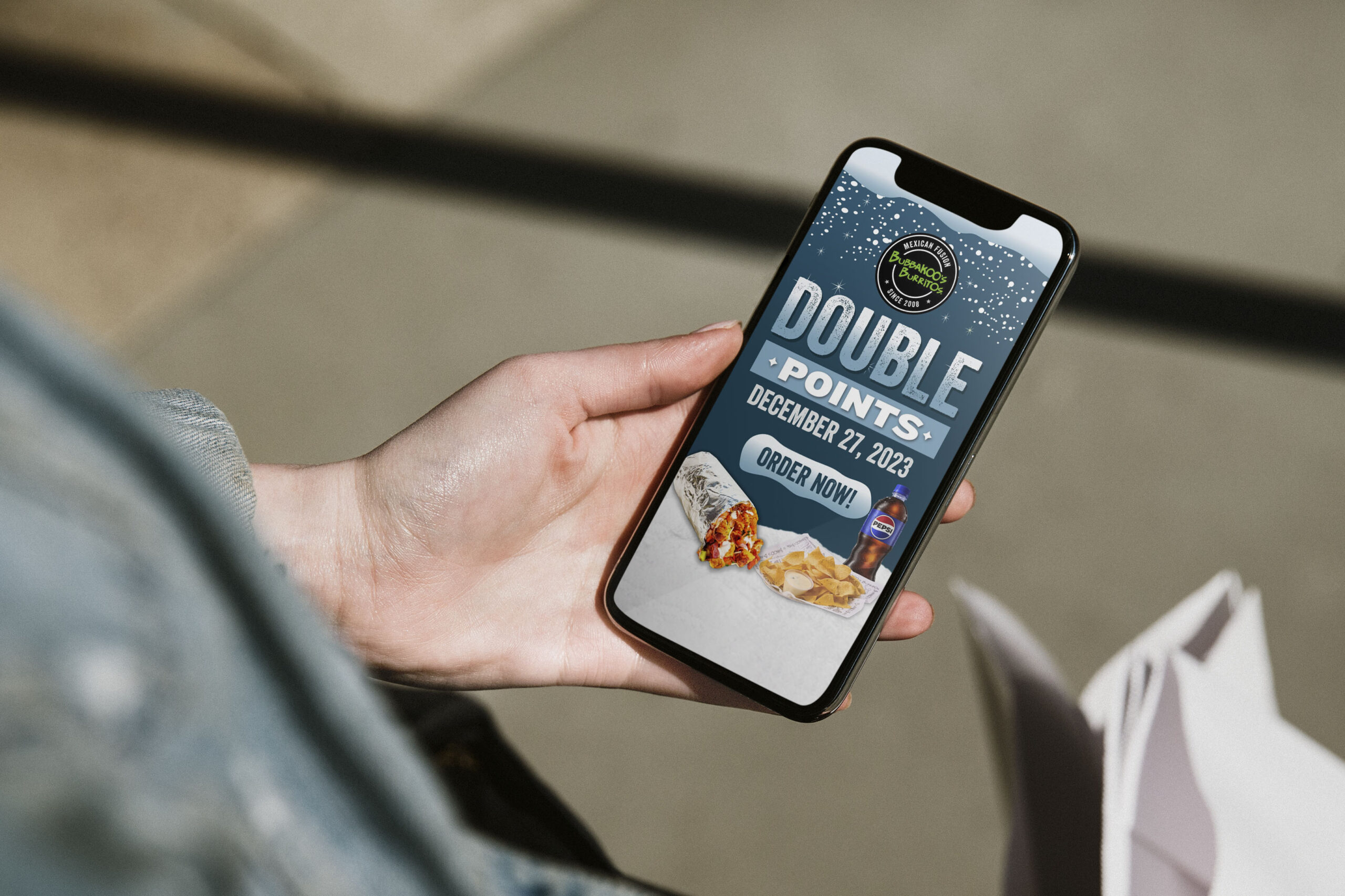
- Point multipliers. Double or triple points on slow days (e.g., every Tuesday this month). These take minutes to set up and directly incentivize visits during your weakest periods.
- Menu-based challenges. Purchase a specific item a certain number of times to earn a reward. Great for promoting new items, clearing inventory, or driving trial.
- Spend-based tiers. Progressive bonus points as guests hit higher spend thresholds in a single visit, encouraging larger checks.
Why challenges outperform blanket promotions: They require the guest to take repeated action. Instead of a one-time discount that might not change behavior, a challenge creates a multi-visit commitment. And because you're only issuing the reward after the behavior is completed, your effective discount rate stays low.
One brand ran A/B tests on their frequency challenges and discovered that early access to a menu item significantly outperformed a free topping as a reward. Their guests were telling them, through their actions, that they valued exclusivity over discounts.
7. A/B Test Everything, Especially Whether You Need a Reward at All
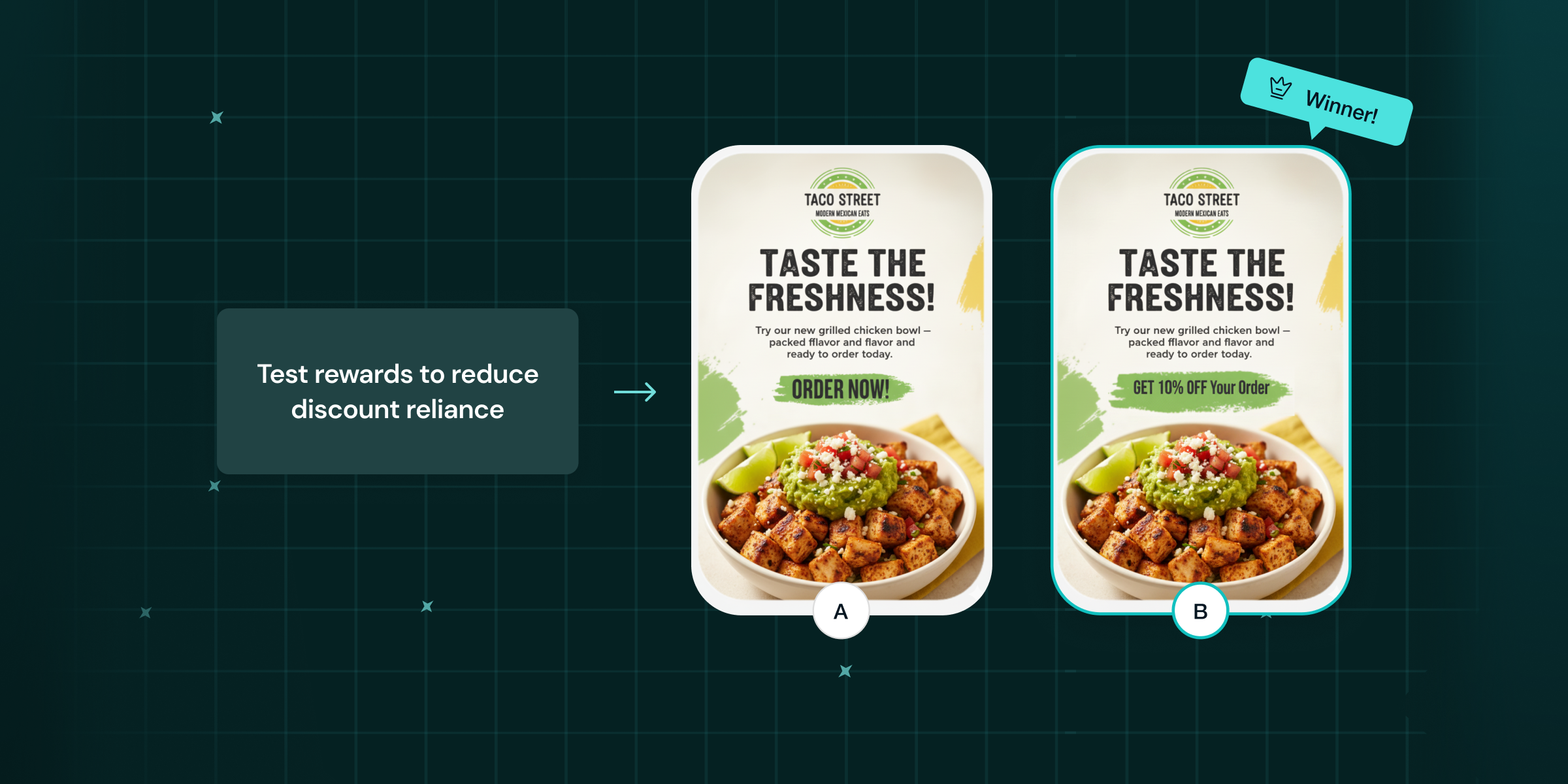
This might be the most counterintuitive finding across all our calls: in many cases, campaigns without a reward attached perform just as well as those with one.
Multiple brands have A/B tested their activation and win-back campaigns and found that the winning variant was simply a well-crafted nudge. No discount, no free item, just a timely, relevant message.
What this means for your margin: If you can drive the same guest behavior with a "Hey, we noticed you left something in your cart" as you can with "$3 off your next order," you've just turned a cost center into pure retention value.
Where to test first:
- Abandoned cart campaigns: Test reward vs. no reward. A simple reminder often performs equally.
- First purchase activation: Guests who just signed up often still have their intro reward. A brand story or menu highlight may be more effective than stacking another offer.
- Win-back at 30 days: Start with messaging only. Reserve rewards for the 60-90 day window where guests truly need incentive to return.
Every test should include a control group, a set of guests who receive nothing. This is how you measure true incrementality, not just redemption volume.
The brands that test rigorously and measure by net revenue (not just open rates or redemption counts) consistently find they can reduce their effective discount rate while maintaining or even improving frequency.
8. Keep Your Loyalty Program Fresh
The brands with the strongest long-term engagement treat their loyalty program as a living system, not a set-it-and-forget-it configuration.
Refresh your rewards marketplace quarterly. Add seasonal items, rotate out rewards that aren't driving redemption, and introduce limited-time rewards that create urgency. When guests see the same marketplace every time they open the app, engagement stagnates. When there's something new to discover, they come back to check.
Evolve your automations. Your lifecycle campaigns should be reviewed regularly. Are your win-back windows still aligned with actual guest behavior? Are your activation campaigns driving the conversion rates you expect? The data in your dashboard should inform ongoing refinement.
Weave loyalty into everything. The most successful brands don't treat loyalty as a separate workstream. They incorporate it into seasonal marketing, in-store signage, email subscriber campaigns, food holidays, local events, and social media. Every touchpoint is an opportunity to remind guests why the program exists and what they're earning.
The Bottom Line
The restaurant industry is struggling with traffic. Overall traffic trends are down, and every other technology company is telling the same stretched-thin operators that they're the solution. The way to break through the noise isn't with promises. It's with proof.
The brands in this article are putting their thumb on the scale and seeing real lift. Pokeworks grew their rewards program 4x faster than the prior year and delivered double-digit loyalty sales, recording 14% same-store sales growth. Honest Mary's saw 17.4% same-store sales lift. Flower Child, owned by Cheesecake Factory, increased comparable sales 11%, significantly outpacing the Black Box Fast Casual Dining Index. These are business outcomes, not program metrics.
None of these strategies require a massive budget or a dedicated loyalty team. They require intentionality: setting up the right automations, testing what works, and treating every guest interaction as an opportunity to drive the next visit.
The question isn't whether you have a loyalty program. It's whether your loyalty program is actually changing guest behavior, and whether you can prove it.
Thanx is the leading loyalty and guest engagement platform built for restaurants. We help brands drive profitable growth by increasing guest frequency, growing direct sales, and reducing reliance on discounts. Not a Thanx Customer? Reach out for a demo here →

.png)



.avif)
.avif)