

Create one reward template and deploy it anywhere—across loyalty, campaigns, automations, or promotions—with flexible multi-use options that let guests redeem more than once.
Offer management
Offer management platform that drives frequency while protecting margins.
Most offer platforms fuel discount dependency. Thanx helps you target the right guests with smart rewards that build repeat visits without eroding margins.



https://cdn.prod.website-files.com/67ebf334c5ed562314ad1fdc/695c2192af3edc373db7b7da_Graphic%204.lottie
https://res.cloudinary.com/dreiso3ix/video/upload/v1764639247/Offer_Management_vfey7h.mp4
.avif)
Proven results
Restaurants using Thanx cut discount rates from ~10% to 2.4% on average.
Precision targeting and cost controls protect your bottom line while targeted offers drive real frequency gains.


Thanx restaurants see an average of:
Average effective discount rate vs. ~10% legacy platforms
2.4x
Growth in engaged revenue in year one
5x
Improvement in redemption efficiency
4x

SEE HOW IT WORKS
Thanx is a complete offer management platform that scales across channels.
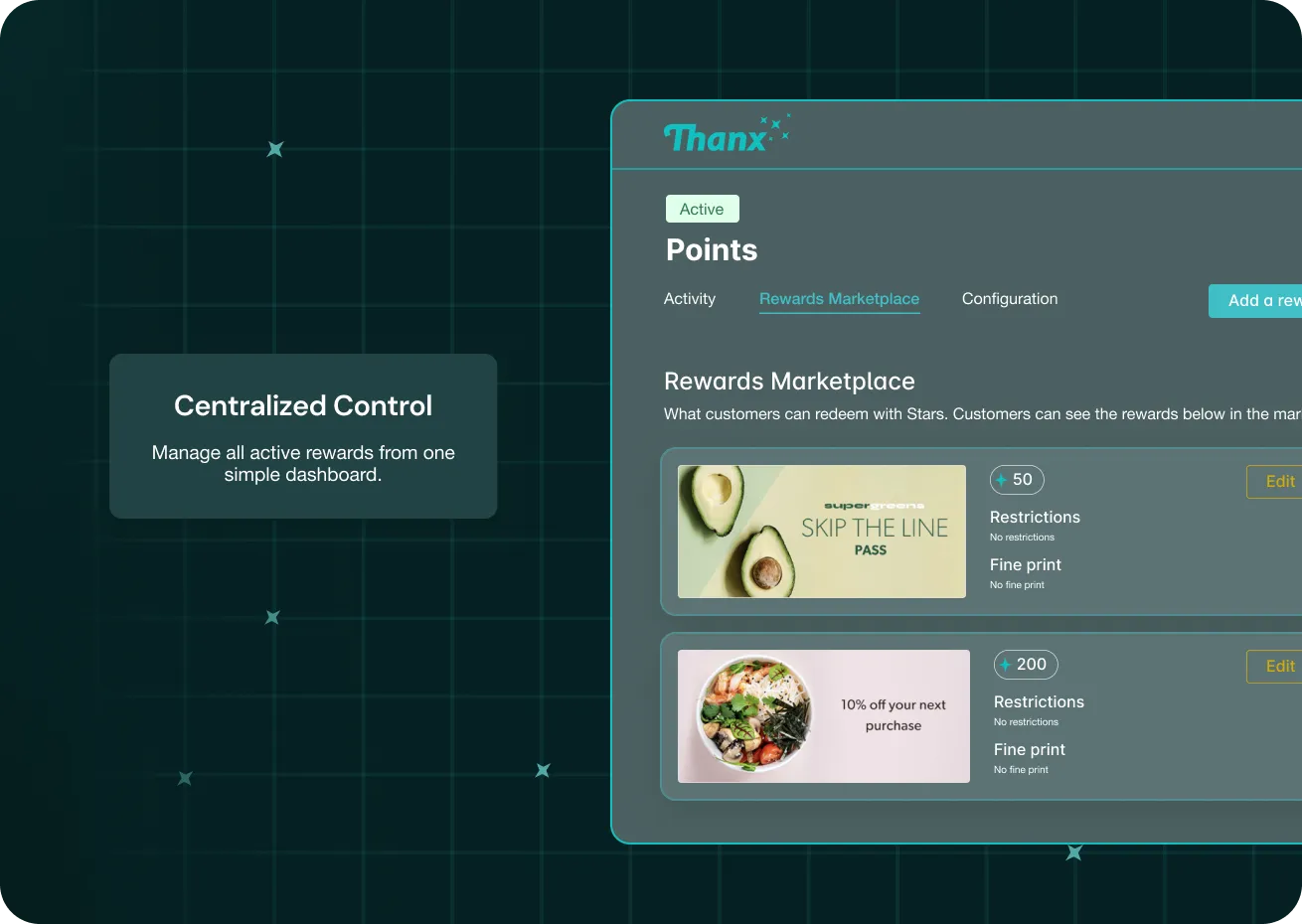
This is some text inside of a div block.
Reward creation
Build once, deploy everywhere with centralized offer management
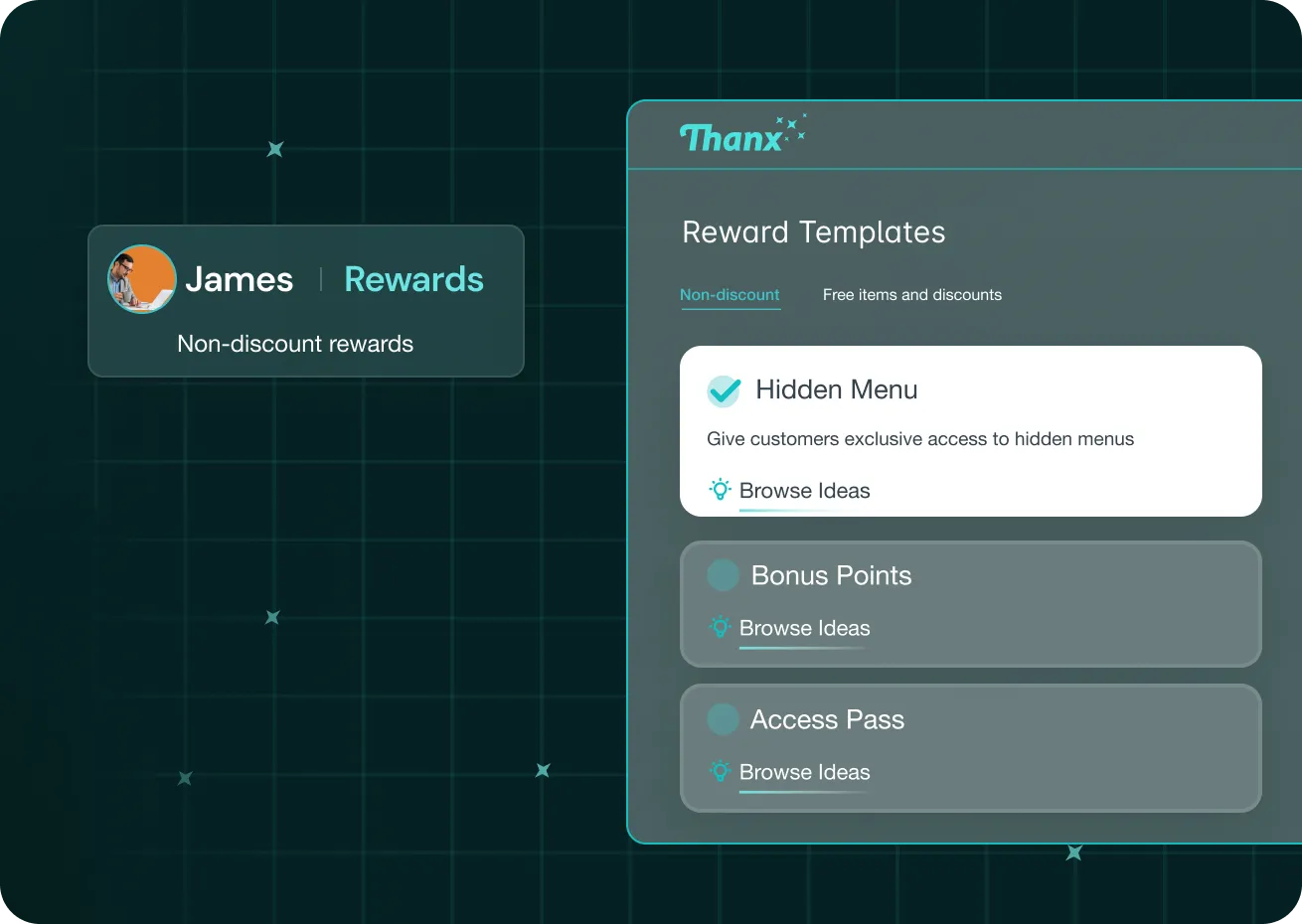
Reward types
Flexible rewards for every promotion
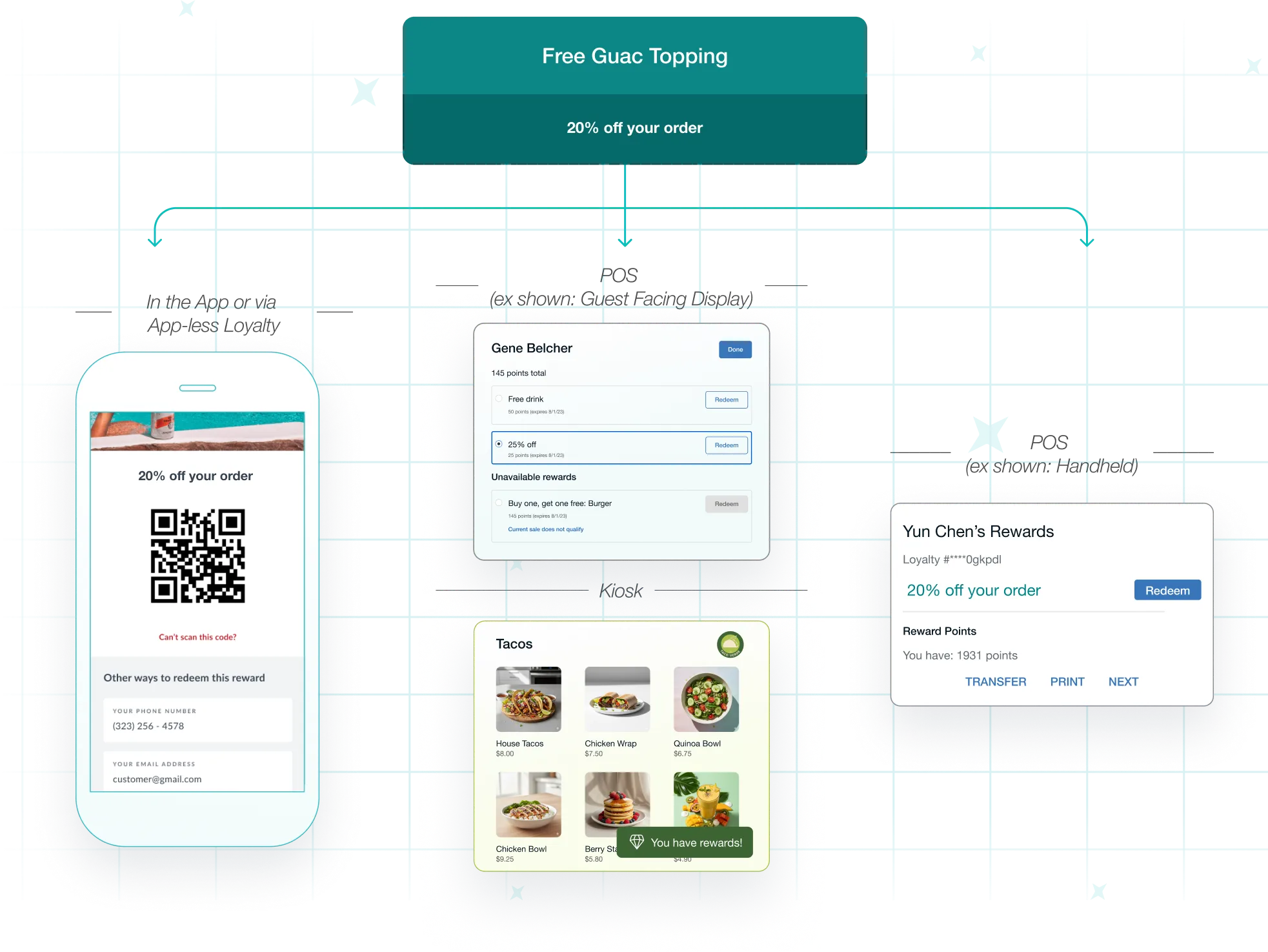
This is some text inside of a div block.
Reward redemption
Redeem seamlessly across digital, in-store, kiosk, and tableside
Customer success stories
Restaurant offer management results.

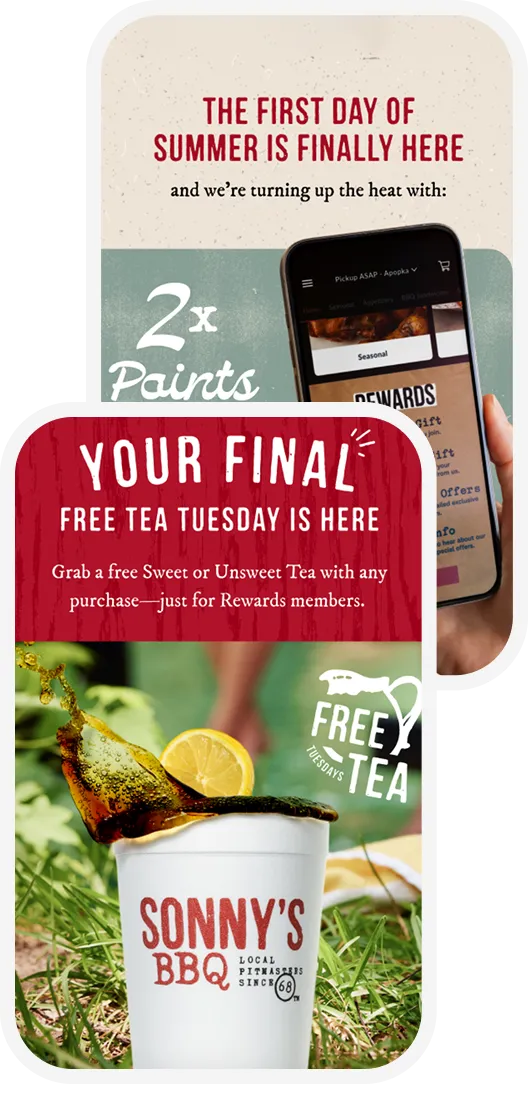
With Thanx, we’ve gained much more control over our marketing spend and the ability to influence specific guest behaviors. For the first time, we’re able to reward loyalty in a more intentional way without always relying on deep discounts.
Katie Love, Chief Marketing Officer | Sonny's BBQ
<1%
Discount rate reduction from 10%
42%
Growth in habitual customers
4x
Redemption efficiency improvement
Next up: Pokeworks

.avif)
We saw strong double-digit growth in sales. And when we moved to Thanx, we redefined our rewards to be far more efficient, resulting in an exceptionally low effective discount rate under the new program.
Ha Ly, Head of Marketing | Pokeworks
4x
Increase in membership in the first 7 months
14%
Double-digit loyalty sales increase YoY, 14% increase in July
90
Days to launch
Next up: Velvet Taco


We found a partner in Thanx because they were equally as passionate about building a program that improved our bottom line without relying on traditional discounts, and instead moving towards offering exclusivity and access to our guests.
Cassie Cooper, Director of Marketing | Velvet Taco
30%
Participation rate tied to weekly revenue
13%
Tier upgrade from a single hidden menu campaign
+5k
Average weekly sign-ups
Next up: Sonny’s BBQ


.svg)
Everything you need to manage, measure, and optimize offers that drive frequency.
Most offer tools stop at discount delivery. Thanx unites every promotion, redemption, and data-driven insight in one platform to drive frequency and protect profit.
Multi-use reward deployment
Smart reward validation and restrictions
Automated validation ensures every redemption meets your rules—from spend thresholds to item, time, and location controls—protecting margins while shaping behavior.
Comprehensive redemption and cost reporting
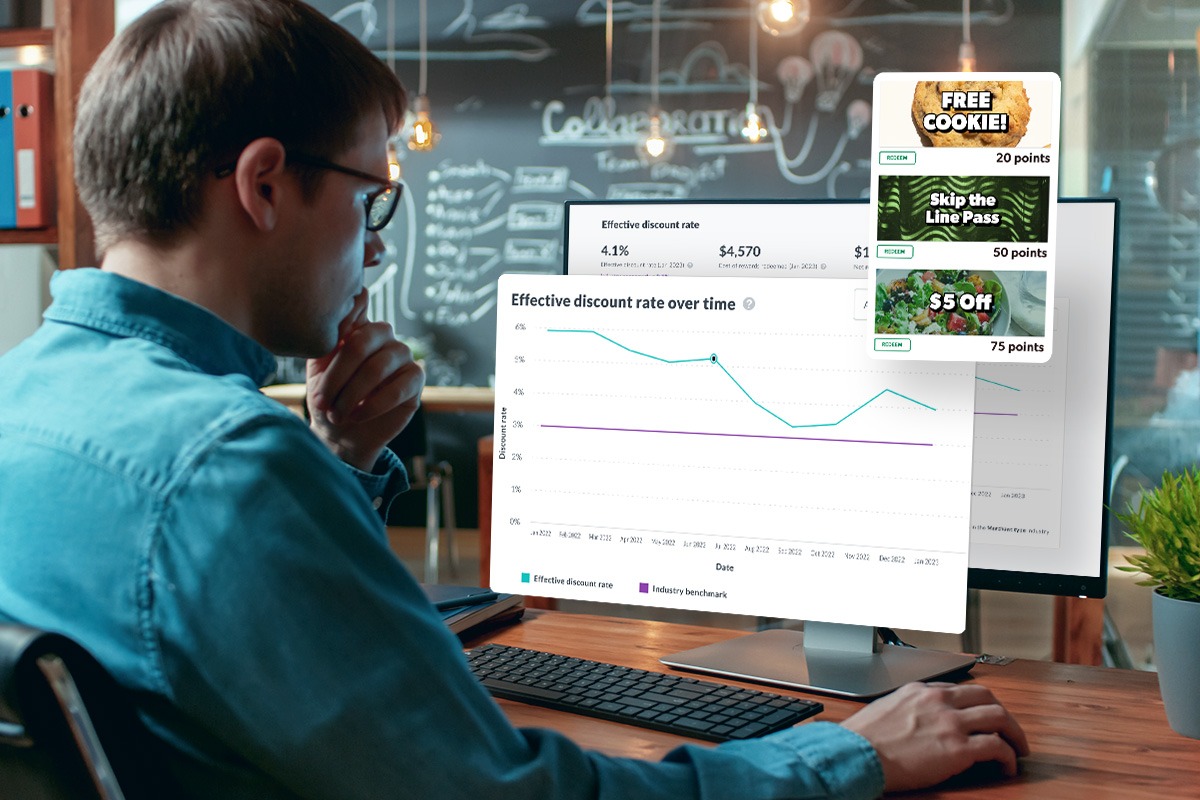
Track redemption velocity, compare campaign performance, and adjust reward economics instantly—averaging a 2.4% effective discount rate vs. ~10% on legacy platforms.
%20(2).avif)
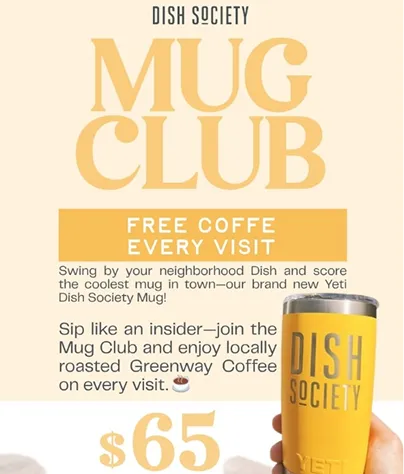
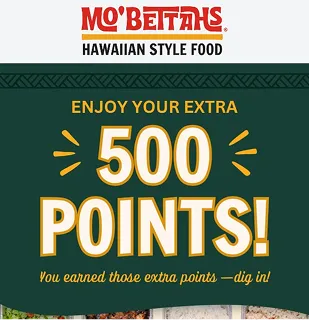
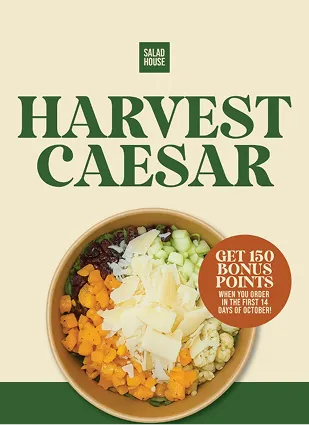


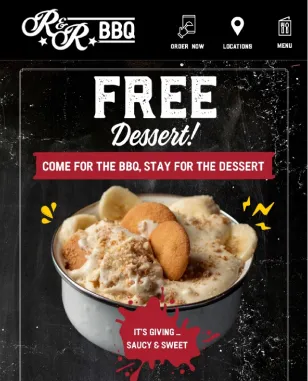
OFFER MANAGEMENT
Complete offer management system for every redemption scenario.
From digital checkout to in-store POS, kiosks, and tableside, Thanx handles offer creation, validation, and redemption across every touchpoint with detailed reporting on every reward.
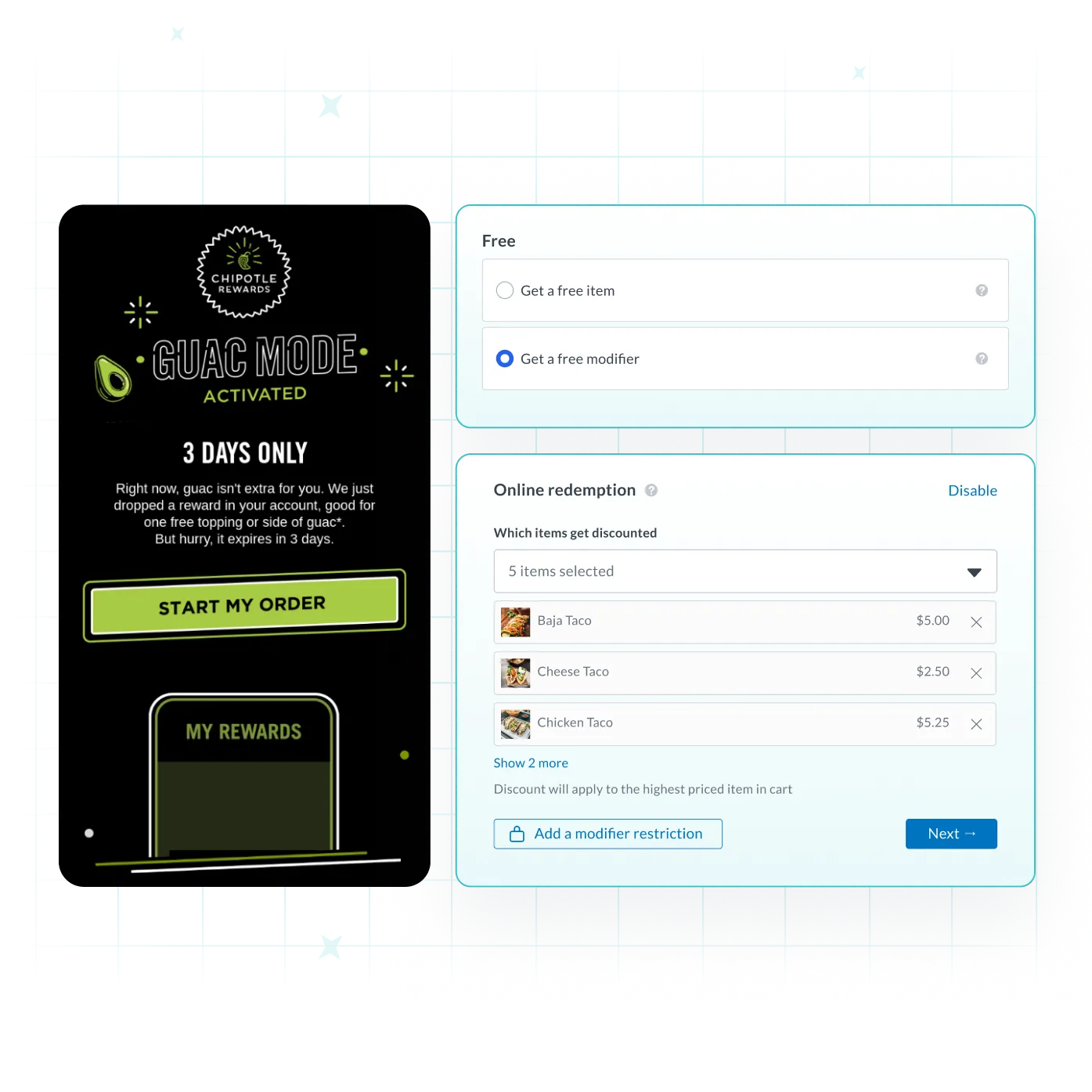
Comprehensive reward types
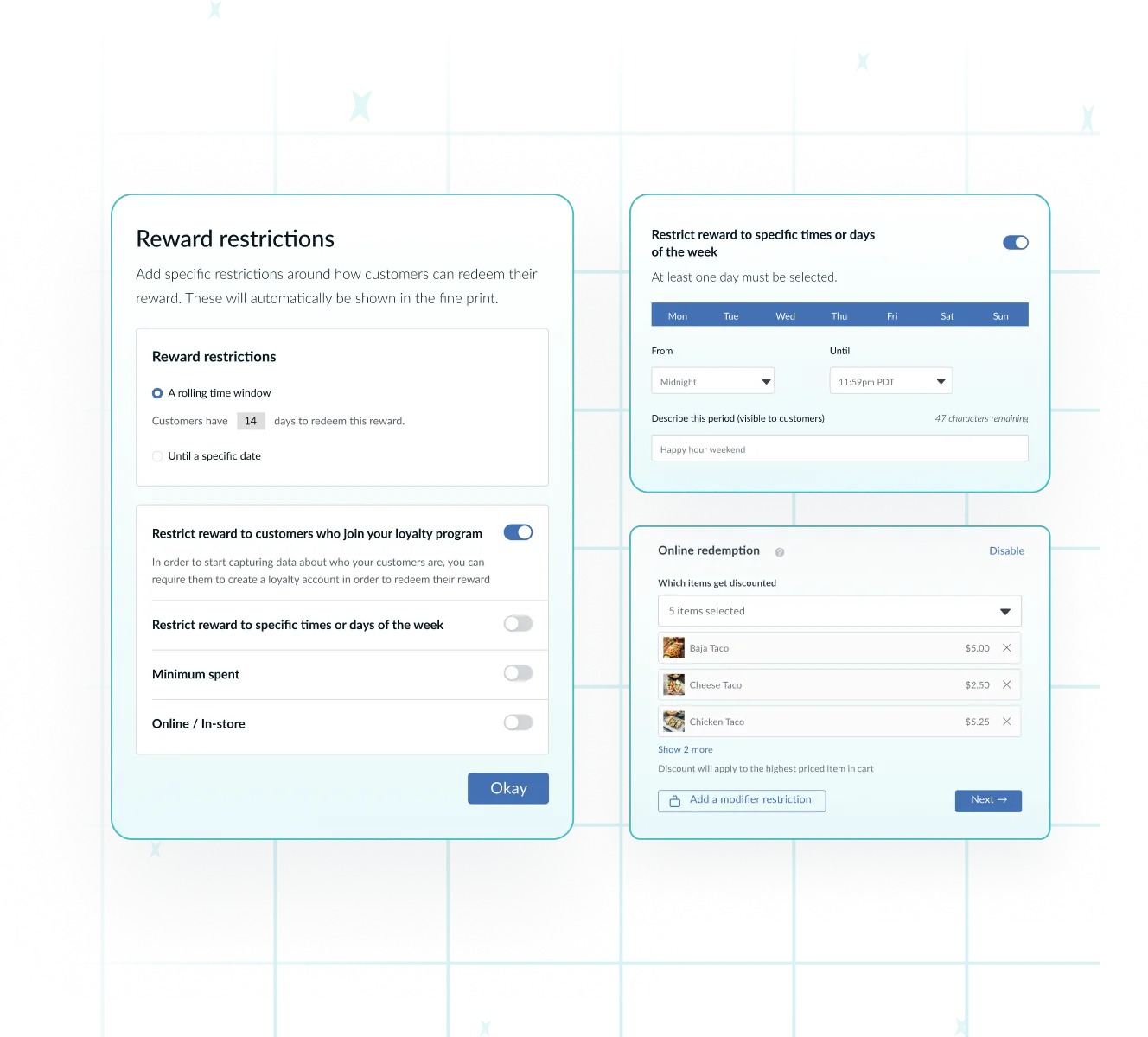
Flexible reward restrictions

Multi-channel redemption
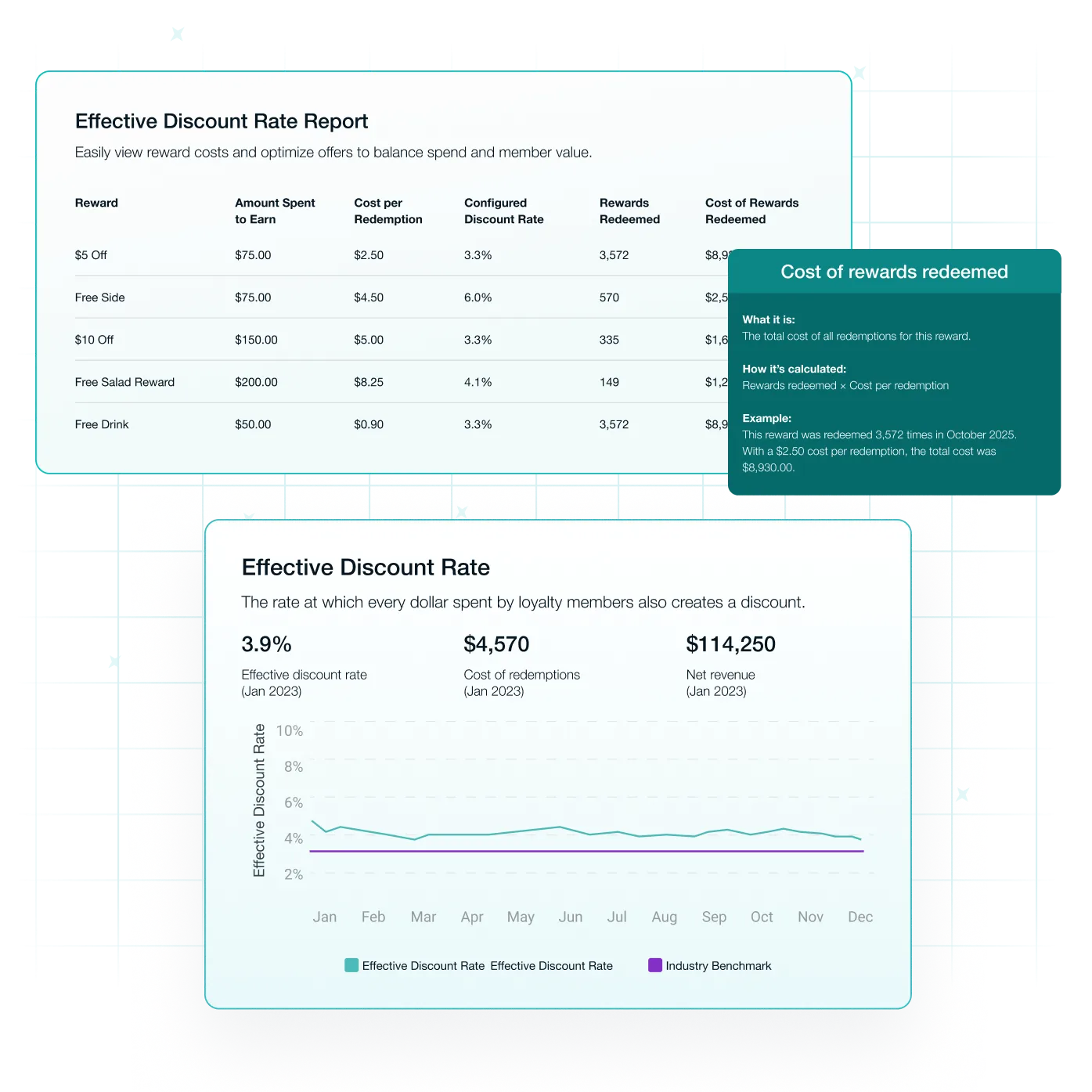
Detailed reward reporting
EXPLORE MORE
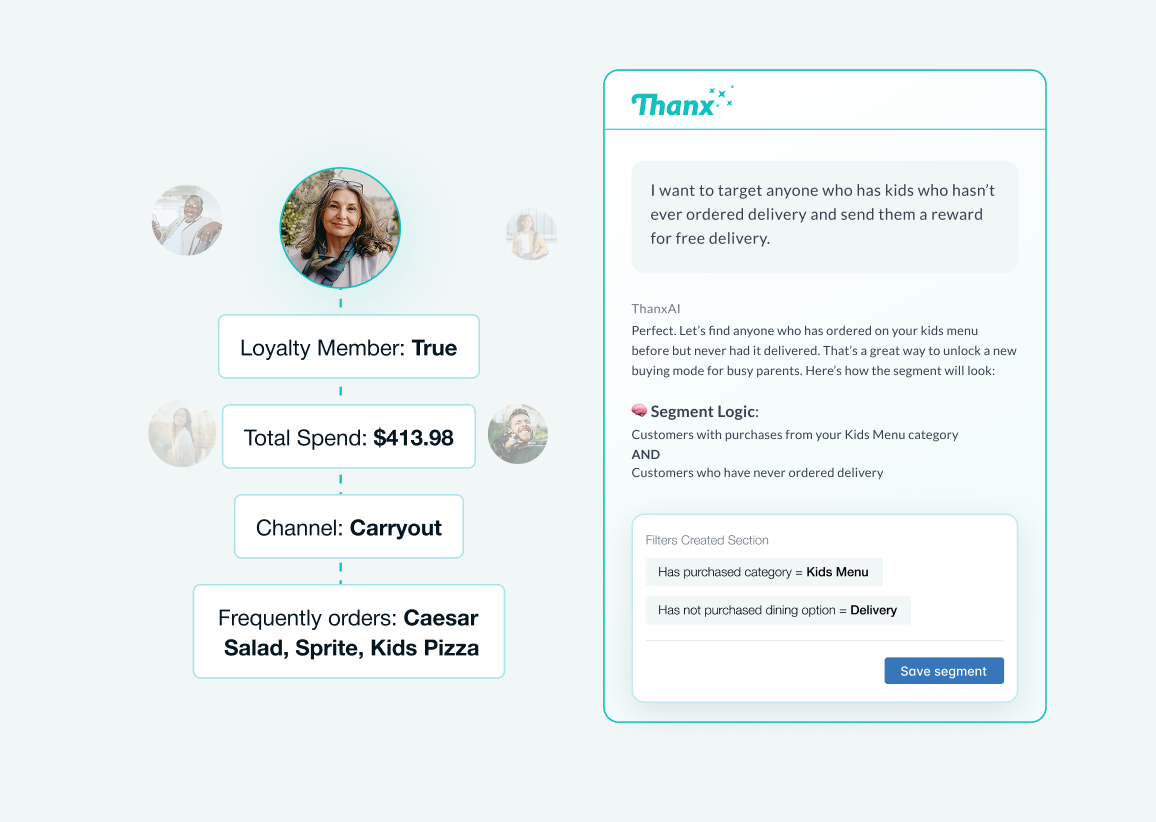
More than just an offer management platform.


FAQ
Answers to commonly asked questions.
What is an offer management system?
An offer management system is a platform that lets you create, deploy, and track promotional offers across marketing channels. In restaurants, this includes digital ordering, in-store POS, kiosks, and even tableside ordering channels.
Offer management systems need to be paired with advanced segmentation, testing, and reporting tools. Without this, restaurants may send out discounts too broadly, which gets expensive fast. You have no way to know if guests would have come in anyway, or if a lesser reward would have worked just as well—or even better.
The problem with most offer management platforms is that they turn into discount machines. They make it easy to blast promotions to everyone, which trains guests to wait for deals and erodes margins. A true offer management system should be paired with a native loyalty and marketing platform to help you drive frequency profitably, targeting the right guests with the right incentives at the right time (not just making it easier to give away margin to people who would have visited anyway).
How does a restaurant offer management system work?
At a basic level, an offer management platform centralizes reward creation and facilitates redemption. You create promotional offers (percentage off, dollar off, or BOGO), distribute them, and the system handles redemption online or in-store. Basic platforms track simple metrics like rewards redeemed and outstanding liability.
Advanced offer management systems, on the other hand:
- Make the creation, testing, and deployment of campaigns seamless.
- Enable multi-channel reward templates where you can build a reward once, then deploy it anywhere: loyalty points programs, tiers, marketing campaigns, automated triggers, or one-off promotions.
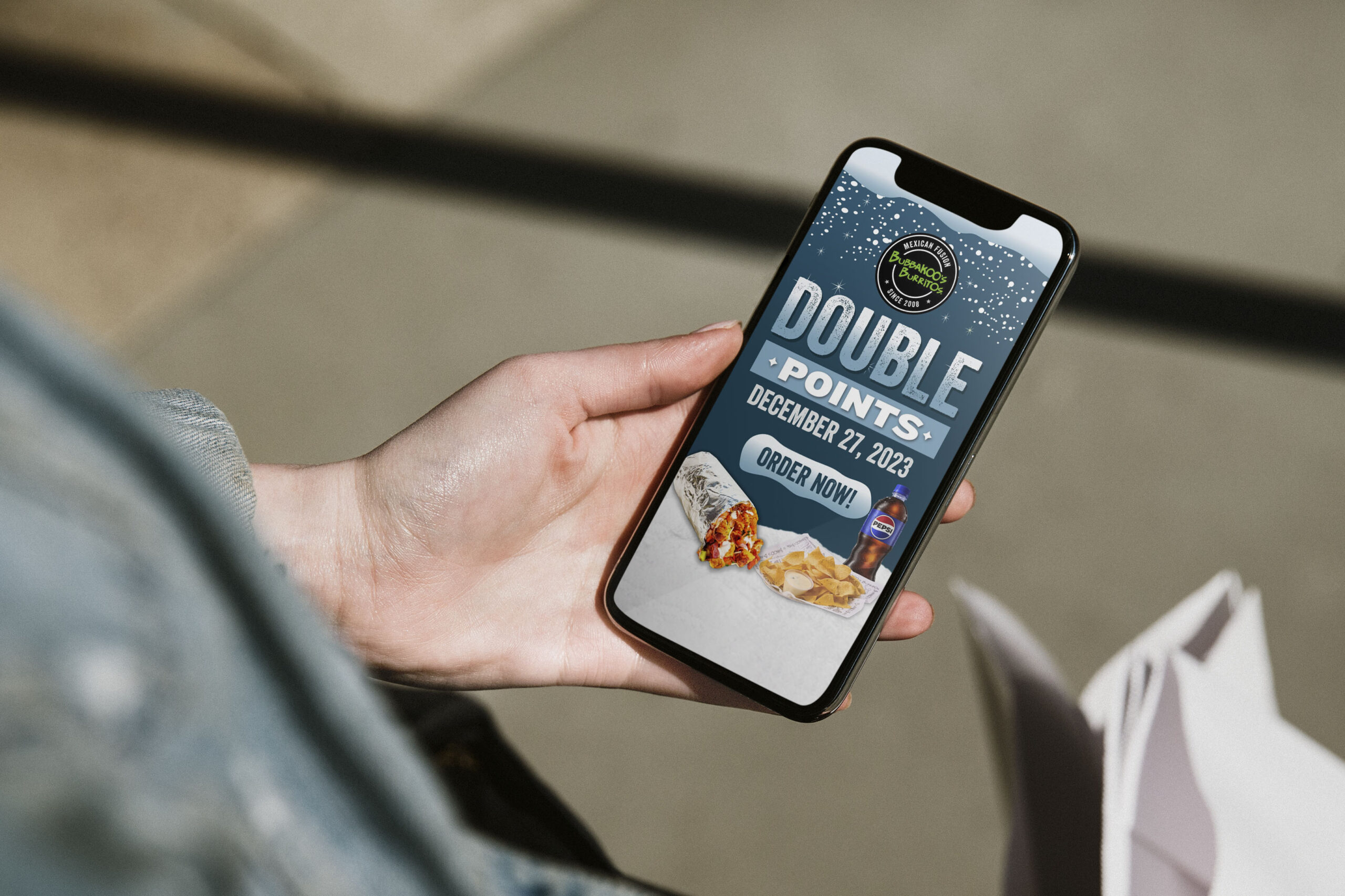
- Support non-discount rewards like hidden menus, VIP access passes, and bonus points. In restaurants, this includes item-level and modifier rewards integrated with menu management platforms for easy selection.
- Offer sophisticated restrictions, such as time and day controls, location-specific targeting, and multi-use rewards that can be deployed multiple times without setting up individual campaigns each time.
- Support every touchpoint: digital ordering, kiosks, tableside, and POS with card-linked or check-in loyalty.
Most importantly, advanced platforms provide actionable insights that help you optimize what's working, like tracking true promotional cost, revealing what resonates with different guest segments, and proving which offers drive incremental customer behavior versus subsidizing visits that would have happened anyway. Without this depth, you're guessing whether your offers build frequency or just burn margin.
What are the benefits of using an offer management platform?
The obvious benefits are operational: real-time validation at the POS or ordering platform instead of managing codes across multiple systems, streamlined reward creation and deployment so you're not recreating offers for every campaign, and tracking to understand what's working so you can protect margins.
But the hidden benefits set advanced platforms apart from basic ones. Deep integrations determine whether relevant offers can be redeemed everywhere or just in limited channels. Can guests redeem at kiosks? Through guest-facing displays at your POS? Does the system support QR code scanning, phone lookup, and card-linked redemption, or does it force you to rely on an app, limiting offers to only superfans willing to download? Without comprehensive integrations, you're artificially constraining who can participate, which defeats the purpose of driving frequency across your full guest base.
The real benefit of an advanced offer management platform is visibility into what actually drives incremental behavior. Most platforms make it easy to blast discounts, but give you no way to measure whether those offers changed guest behavior or just subsidized visits that would have happened anyway.
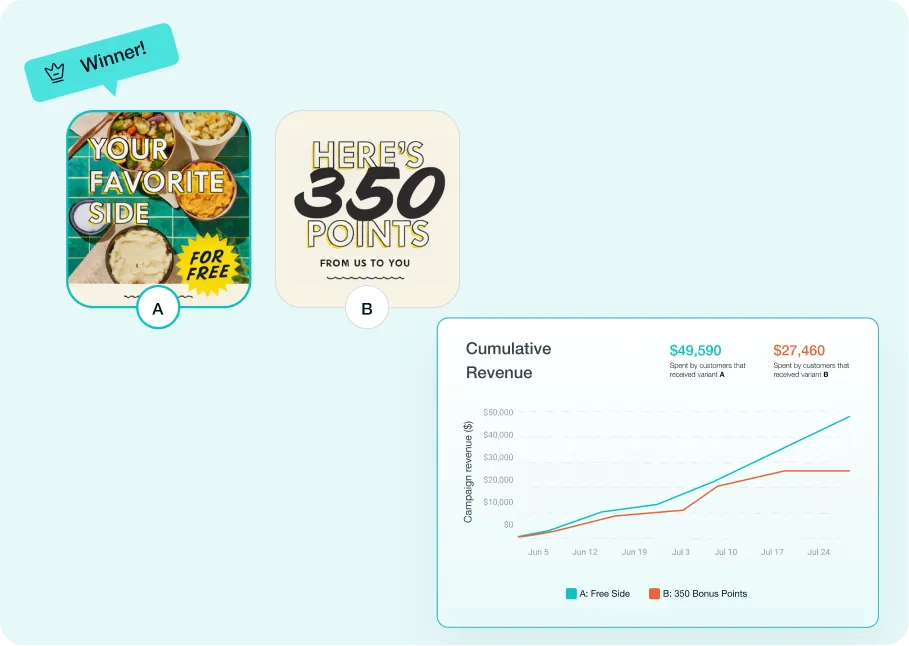
Advanced systems track effective discount rates (your true promotional cost as a percentage of revenue) and support A/B testing with control groups to prove which offers drive frequency versus which ones burn margin unnecessarily. Thanx customers average a 2.4% effective discount rate compared to ~10% on legacy platforms because they can see what's working and stop giving away margin where it doesn't change behavior.
What's the difference between discount and non-discount rewards in offer management software?
Discount rewards directly reduce what guests pay—dollar off, percentage off, BOGO, free items. Non-discount rewards provide value without touching margins: hidden menu access, bonus loyalty points, VIP access passes, or exclusive perks. The dirty secret of most loyalty programs is that they're built entirely on discounts, creating a dangerous dependency in which guests only visit when you're offering deals. Non-discount rewards let you engage high-value customers and build genuine loyalty without training guests to wait for promotions.
The most effective programs use both strategically: discounts to drive specific behavior from dormant guests, non-discount rewards to recognize and retain your best customers without eroding margins.
How do I know if my offer management system is actually driving incremental visits or just discounting behavior that would happen anyway?
Measuring incrementality requires visibility into what's actually changing guest behavior. Look for offer management platforms with integrated marketing tools that include control groups and testing capabilities; this lets you compare offer performance and isolate true impact. Effective discount rate reporting by reward is also critical: it shows your promotional costs as a percentage of revenue, then compares individual rewards to each other and in aggregate. This reveals your overall effective discount rate, which rewards are most effective and at what cost, so you can fine-tune your approach and get more surgical over time—delivering just the reward needed at any given moment.
Without these capabilities built into your broader platform, you're operating in the dark, unable to distinguish between compelling offers that drive new visits and those that simply subsidize guests who would have come anyway.
Many standalone offer management systems can deploy promotions but provide only basic reporting: redemption counts, redemption percentages, and outstanding liability. The result is operators default to broad-based discounting without knowing what's working. When you can measure true promotional cost and compare performance across different offer types and audiences, you stop giving away margin unnecessarily and start targeting offers only where they change behavior.
.avif)
.avif)