


.avif)

If you've searched for Paytronix pricing, you've already hit the first sign of what you're getting into: there isn't any. No tiers, no starting price, no ballpark. Just a form asking you to contact sales.
That opacity isn't accidental. Paytronix is an enterprise platform with enterprise contract dynamics, and the investment reflects it. Before you schedule a demo or issue an RFP, here's what operators actually need to know about how Paytronix pricing works, what drives the cost, and whether the platform delivers what it charges for.
Key Takeaways
- Paytronix uses custom, quote-based pricing with no public tiers. Brands must contact sales to get a number.
- Cost scales with the number of locations, database size, selected modules, and message volume. Change fees are a known friction point.
- For some enterprise brands, the platform delivers real value. For others, the price and rigidity raise legitimate questions about fit.
How much does Paytronix cost?
Paytronix does not publish pricing. The platform operates on a contracted, quote-based model where every deal is negotiated based on scope. Expect annual licensing at minimum, with multi-year contracts common at enterprise scale.
Third-party review platforms and industry conversations suggest that Paytronix pricing lands in the range of tens of thousands of dollars annually for small chains, scaling into six figures for enterprise brands with large guest databases and multiple active modules. Those figures reflect the platform fee alone, before implementation, professional services, and ongoing support costs.
If you want a number, you'll need to go through sales. What you get in return is a scoped proposal based on your location count, data volume, and the specific modules your brand needs.
To get additional details around Thanx as you evaluate your platform options, request a demo to see how Thanx works for your brand.
Factors affecting Paytronix pricing
Paytronix pricing is modular and variable. The quote you receive depends on how many of the following cost drivers apply to your brand.
- Location count. Per-location fees are standard across loyalty platforms, and Paytronix is no exception. The more units you operate, the larger the base contract.
- Guest database size. Paytronix prices partly on the size of the member database the platform manages. A national chain with millions of profiles will pay more than a regional brand with a few hundred thousand.
- Modules selected. Paytronix offers loyalty, online ordering, omnichannel messaging, catering management, kiosk ordering, and payment integrations as distinct capabilities. Each module added to the scope increases the contract value. Brands that want the full platform suite pay full platform prices.
- Email and SMS volume. Messaging volume is a real variable. Brands running high-frequency CRM campaigns at scale will see this reflected in their quote.
- POS and system integrations. Paytronix supports integrations with Toast, NCR, Oracle, Revel, Agilysys, and others. Integration complexity and the number of connected systems can affect both implementation costs and ongoing fees.
- Change fees. This is worth calling out specifically because it surprises operators post-launch. Paytronix charges fees when brands want to modify their loyalty program structure after going live, including earn rules, reward tiers, and redemption mechanics. One Capterra reviewer put it plainly: "Change fees add up quickly. Every time we want to modify our loyalty program, there's a cost involved." If your brand anticipates evolving its program over time, factor this in.
Does Paytronix have a free plan?
No, Paytronix is a contracted enterprise platform with no free tier. Every brand that goes live on the platform does so through a paid contract negotiated with the sales team.
It's worth clarifying one nuance: guests themselves join loyalty programs through Paytronix at no cost. But the restaurant brand pays for the platform, the infrastructure, and the operational capabilities that power the program. There is no freemium entry point.
Paytronix does offer a free demo for brands evaluating the platform. If you're in the research phase, that's the right starting point for understanding how the product would work for your specific use case and getting a sense of what the investment might look like.
Is Paytronix worth the investment?
For the right brand, yes. Paytronix has built a comprehensive platform covering loyalty, ordering, CRM, and guest messaging, and the feature breadth is real. Brands that need the full scope under one contract and have the internal resources to manage a complex platform can find genuine value here.
On G2, Paytronix holds a 4.3/5 rating based on 30+ reviews. Capterra shows a 4.5. Common praise across both platforms points to strong gift card management, capable reporting tools, and active partnership with the implementation team at launch. Reviewers who are happy with Paytronix tend to describe it as a powerful platform that does a lot.
The critiques cluster around a few recurring themes. Post-launch support responsiveness surfaces repeatedly across reviews. "The system is very robust, but it takes a long time to learn, and the support team can be slow to respond," one G2 reviewer wrote. Beyond support, the change fees noted above represent a real constraint for brands that want to iterate on their programs. And several reviewers describe a steep learning curve that slows time-to-value, particularly for lean marketing teams.
The honest answer is that Paytronix is built for brands with the resources to match it: technical support to manage integrations, marketing bandwidth to work through the platform's complexity, and budget tolerance for change fees when programs inevitably need to evolve. For brands in that position, the investment can pay off. For brands without those resources, the mismatch between platform capabilities and team capacity is where ROI becomes harder to defend.
Exploring alternatives to Paytronix?
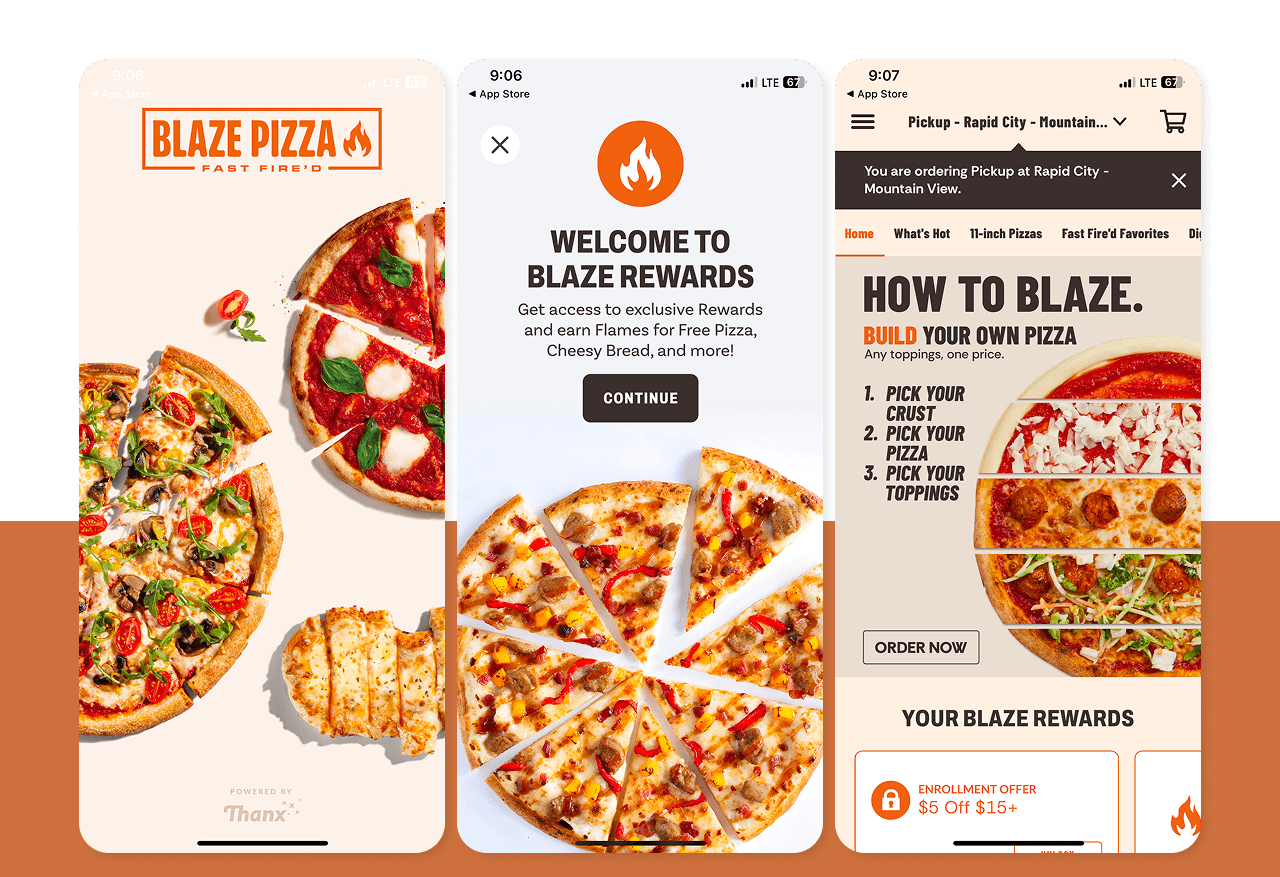
If you're evaluating Paytronix, Thanx is worth putting on your shortlist. Thanx is a loyalty and guest engagement platform built specifically for restaurant brands, and a number of operators have switched from Paytronix to Thanx in recent years, including Hopdoddy (5x sign-ups in year one) and Huddle House (~300 locations).
What Thanx delivers:
- App-less enrollment that captures 263% more sign-ups than legacy platforms, reaching guests beyond the superfan base
- Non-discount rewards, including VIP access, secret menus, and bonus perks, that drive frequency at a 2.4% average effective discount rate versus the ~10% industry standard
- Loyalty built into the ordering experience, with a 96% cart conversion rate and 90% of brands growing digital sales in year one
- SegmentAI, a natural language segment builder using 400+ guest attributes that cuts campaign execution time by 95%
- No change fees. Modify earn rules, reward tiers, and redemption mechanics anytime without an extra invoice
- An 87-day average launch time and a 4-hour average support response time, maintained beyond launch
If you're ready to see what the ROI looks like for a brand your size, start at thanx.com/request-demo.


.png)





.avif)
.avif)