

.avif)

The Best Alternatives to Punchh Software in 2026
Your loyalty program has members. What it may not have is proof. If you cannot tell your CFO how many extra visits or how much incremental revenue it drove last quarter, it becomes much harder to defend what you're spending on loyalty.
Punchh is one of the platforms restaurant marketers have turned to help manage that equation. Now sold as PAR Punchh inside PAR Engagement, it is one of the longest-established enterprise loyalty platforms in the restaurant industry, with deep penetration among QSR and fast casual chains. Its scale and feature breadth are genuine strengths.
But as brands ask more of their loyalty programs, they also have more to consider when choosing the platform behind them. They need a closer look at how easily their team can run the program, what they'll actually use, and whether they can measure loyalty's contribution to revenue.
So we compared the strongest alternatives to Punchh software in 2026, each judged on one thing: whether it turns loyalty into revenue you can prove.
Our Methodology & Criteria for Selecting the Best PAR Punchh Alternative
We built this list around one question: which platforms actually fix the problems that send brands looking past Punchh in the first place. So we evaluated the areas marketers care most about: ease of enrollment, reporting capabilities, total costs, and how much control you have over changes.
For our assessment, we pulled information from primary product documentation, published pricing and plan details (if they exist), and customer outcomes reported in case studies and press materials. We also sourced figures from vendors, but identified them as such when we couldn't independently verify them. We focused specifically on platforms built for multi-unit restaurant and convenience store brands.
We compared each platform across five areas:
- Enrollment and participation. A loyalty program can only see the guests it can identify. We looked at how each platform handles enrollment across digital and in-store transactions, including whether every guest can join without downloading a mobile app.
- Speed to launch and make changes. We reviewed implementation timelines and what happens after launch. Can marketers update the app, build campaigns, and change rewards themselves, or do those changes require vendor support, developers, or additional fees?
- Reporting leadership can act on. We looked beyond basic loyalty activity to metrics including capture rate, repeat behavior, effective discount rate, and incremental revenue. We also looked for capabilities such as control groups and A/B testing that help separate campaign lift from activity that would have happened anyway.
- Pricing and stack flexibility. We reviewed how each vendor structures pricing, which capabilities cost extra, and whether adopting loyalty requires changes to other parts of the restaurant's technology stack. We also considered integrations, APIs, and access to the brand's own data.
- Impact on margin. We looked at how each platform structures rewards, including whether brands can offer benefits beyond discounts, and what tools are available to measure the revenue and margin impact of those incentives.
The result is not a ranking of which platform packs in the most features. It assesses which ones best close the gap between running a loyalty program and proving it drove revenue.
Best Punchh Alternatives
- Thanx for measuring loyalty impact on revenue
- Paytronix for one broad suite from a veteran vendor
- Incentivio for mid-market all-in-one
- Toast Loyalty for brands already on Toast
- Sparkfly for real-time offer redemption tracking without loyalty
1. Thanx
Best for: Enterprise and fast-growing multi-unit brands that want loyalty to produce measurable, profitable revenue without an enterprise-sized marketing team.
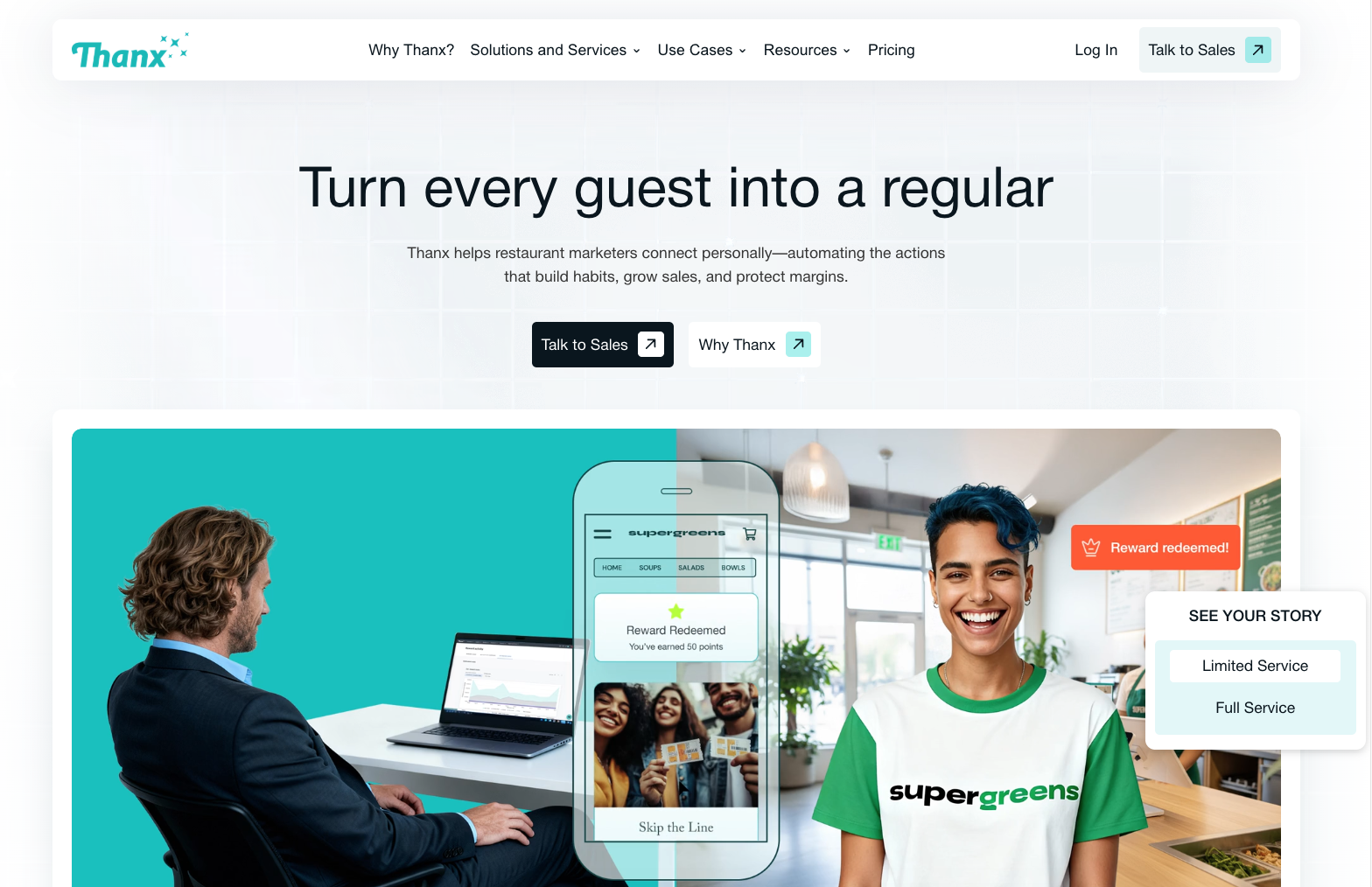
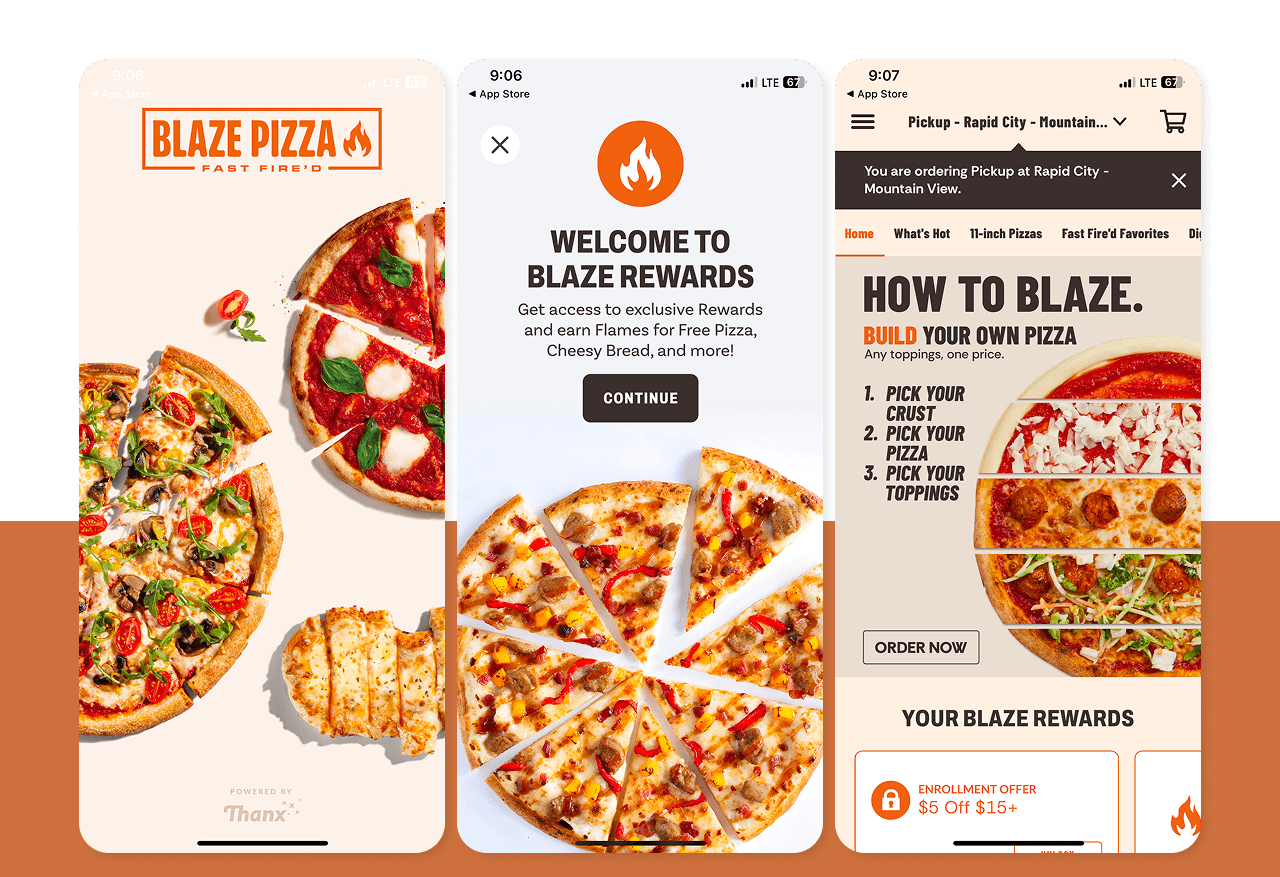
Thanx is the leading modern alternative to Punchh, built for brands that want provable outcomes rather than a bigger points ledger. Blaze Pizza migrated more than five million rewards members from Punchh to Thanx, and Pokeworks and Cheba Hut also transitioned from Punchh to Thanx with measurable outcomes.
Key Features & Differentiators
- Frictionless enrollment the brand controls: Guests can join app-less through a QR code or text link, at the register on the guest-facing display, or automatically when they order online, and brands choose the earning model that fits their operation and can change it later without switching platforms. Brands moving off legacy platforms see 265% more sign-ups per location and 223% higher revenue capture, exactly where app-focused programs stall.
- First-party digital ordering built into loyalty: Web and mobile ordering with loyalty embedded in checkout, plus a no-code CMS so marketers update apps and offers without developers or per-change fees.
- Proof in the dashboard: A/B testing, control groups, and incremental-lift reporting tie campaign performance to revenue and frequency, the clearest contrast with platforms that report participation and leave attribution to guesswork.
- ThanxAI agentic segmentation: Launched in 2025, it builds complex, multivariate segments from plain-language prompts using 400+ customer attributes, with no query building required.
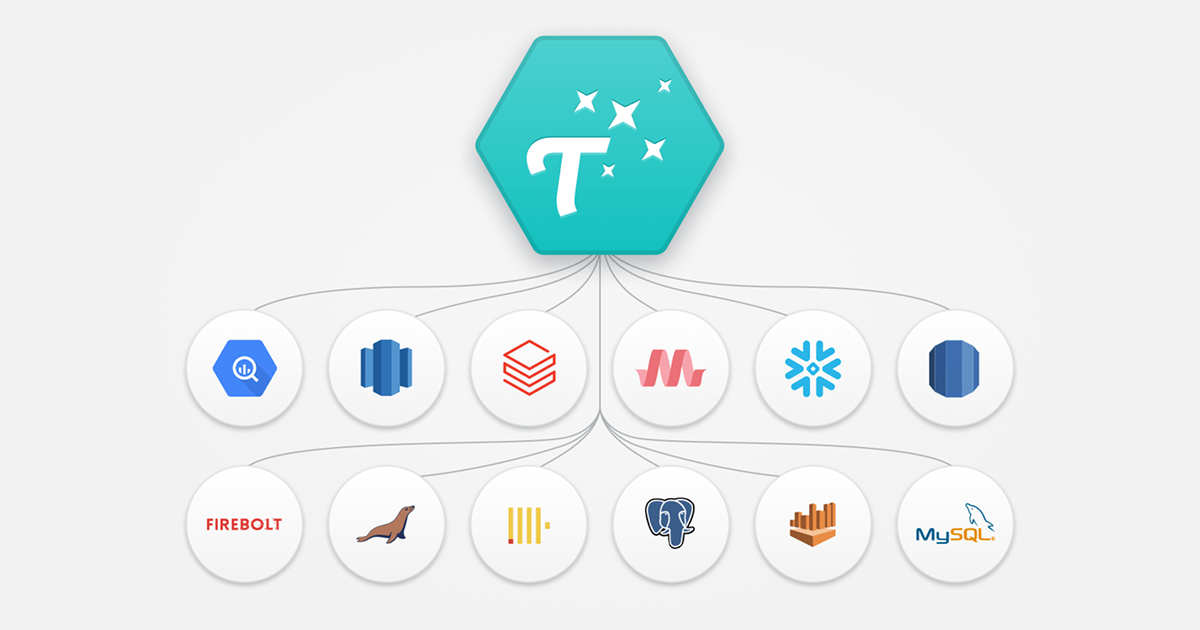
- Open platform, fast implementation: POS-agnostic architecture with open APIs and 60+ prebuilt integrations across POS, ordering, feedback, and kiosk. Implementations average around 90 days, compared with the 9-12 months common in the category, with no hardware and existing apps rolled over.
Pros
- Multiple enrollment options capture far more purchase data than app-dependent programs.
- Roughly 90-day implementations and no hardware requirement keep the operational lift light.
- Control groups and lift reporting prove ROI instead of guessing.
- POS-agnostic and API-first, so loyalty does not dictate your stack.
Request a demo to see what your program would look like on Thanx.
Pricing
Thanx does not publish list prices, but its pricing page explains the model: quotes are based on restaurant count and the modules a brand needs, from loyalty and CRM to digital ordering and marketing automation. Pricing is a flat per-location SaaS fee with no variable transaction charges, quoted per brand after scoping.
2. Paytronix
Best for: Established multi-unit restaurants and convenience stores that want one broad suite from a long-established vendor.
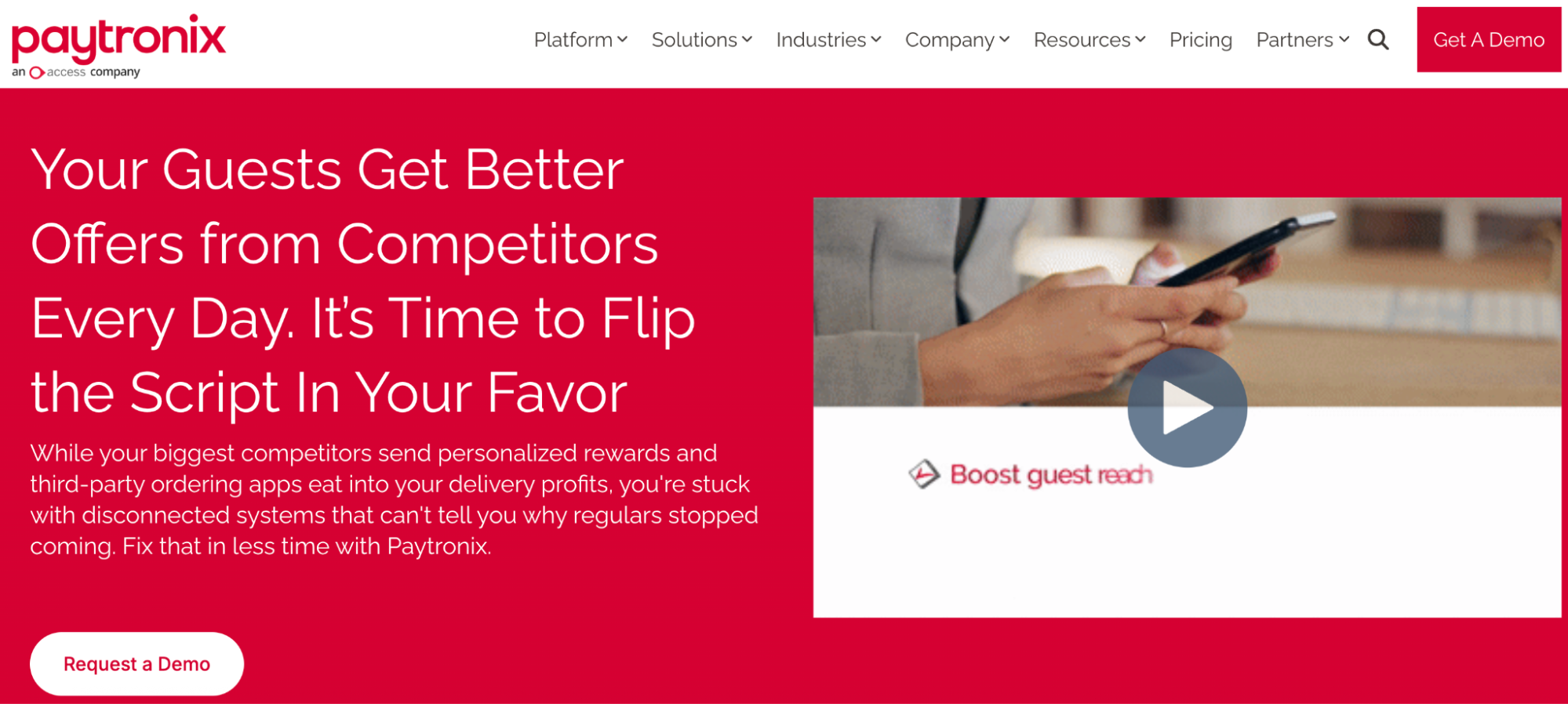
Paytronix, founded in 2001 and acquired by The Access Group in a deal announced in late 2024, is deployed across more than 50,000 sites and 1,800 brands.
Key Features & Differentiators
- Gift card and stored value: The platform's best-known strength. Gift card management, including the back-end accounting logic that franchise systems require, is often the entry point for enterprise brands.
- All-in-one suite: Loyalty, online ordering, CRM, gift cards, subscriptions, and payments in one platform, with 450+ integrations across 30+ POS systems. Loyalty and discount rules are configured separately in each connected system, such as Toast and NCR.
- Segmentation and AI: Hundreds of prebuilt segments plus AI-driven messaging. Campaigns run on a single-path workflow rather than if/then branching, and the AI sets lapse and win-back timing without exposing the underlying logic.
Pros
- More than 20 years in the market, with deep penetration among full-service and casual dining chains.
- Best-in-class gift card and stored value management, especially for franchise accounting.
- Broad feature set that supports complex, multi-tier program structures.
Pricing
Not published. Quoted per brand, typically per location. Budget beyond the platform fee: new rewards and program changes are built by Paytronix rather than self-serve, with a lead time of about a week for reward setup; contractual change fees apply (brands have reported figures in the $40,000 to $50,000 range); deeper analytics can require a separate paid engagement with the vendor's team; and many brands add a third-party CDP for behavioral analysis.
3. Incentivio
Best for: Growing mid-market multi-unit brands that want ordering, apps, and loyalty from one vendor.
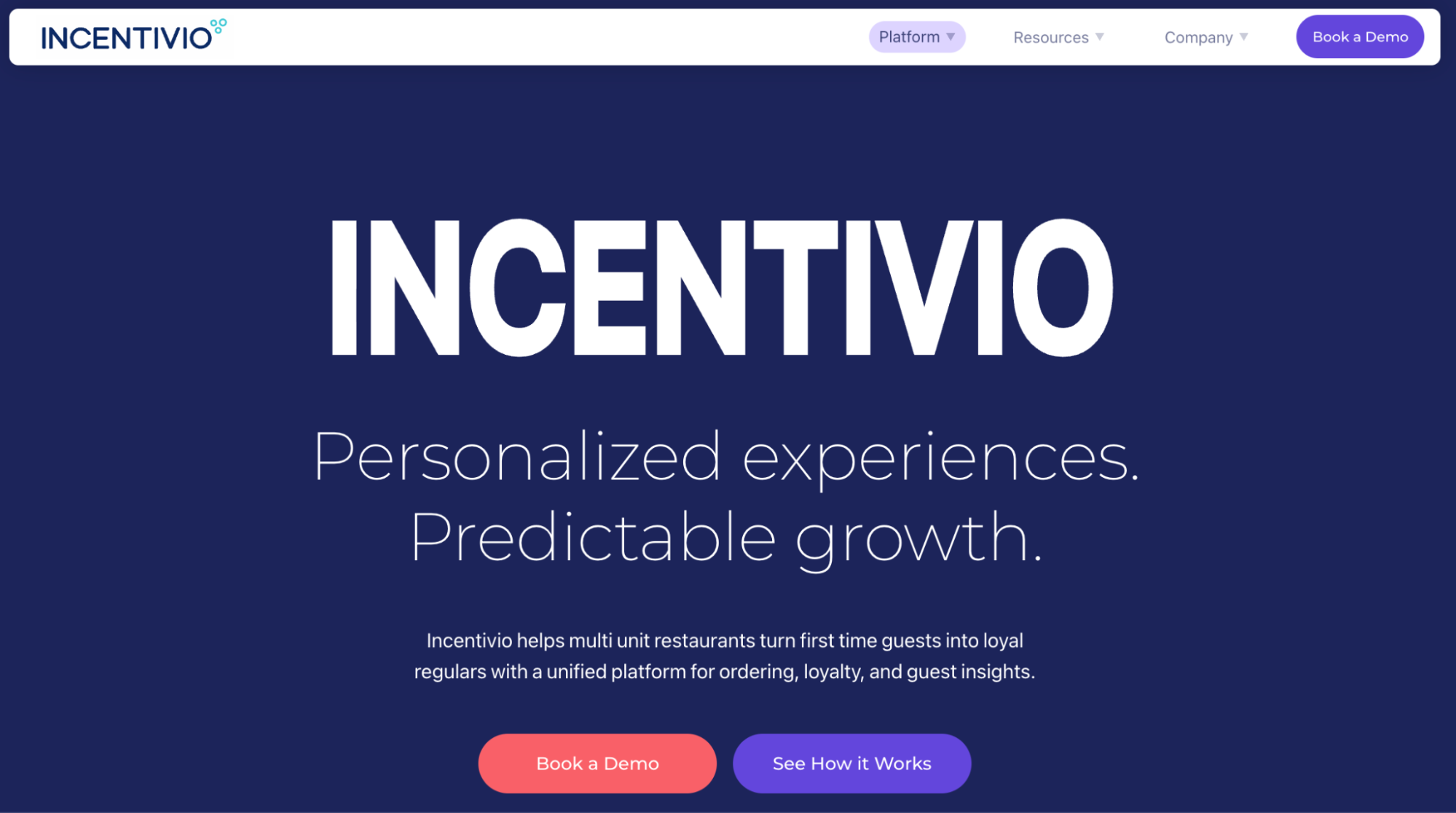
Incentivio is a Boston-based guest engagement platform for growing multi-unit brands, bundling branded web and mobile ordering, white-label apps, and loyalty in one system. The company says it supports thousands of restaurants across the US and Canada, and its 2026 loyalty benchmark report analyzes performance across more than 4,000 restaurant locations.
Key Features & Differentiators
- Branded ordering and apps: Combines web and mobile ordering with white-label apps the brand owns. App changes aren't fully self-service, so Incentivio handles certain home-screen updates and ships them as app releases.
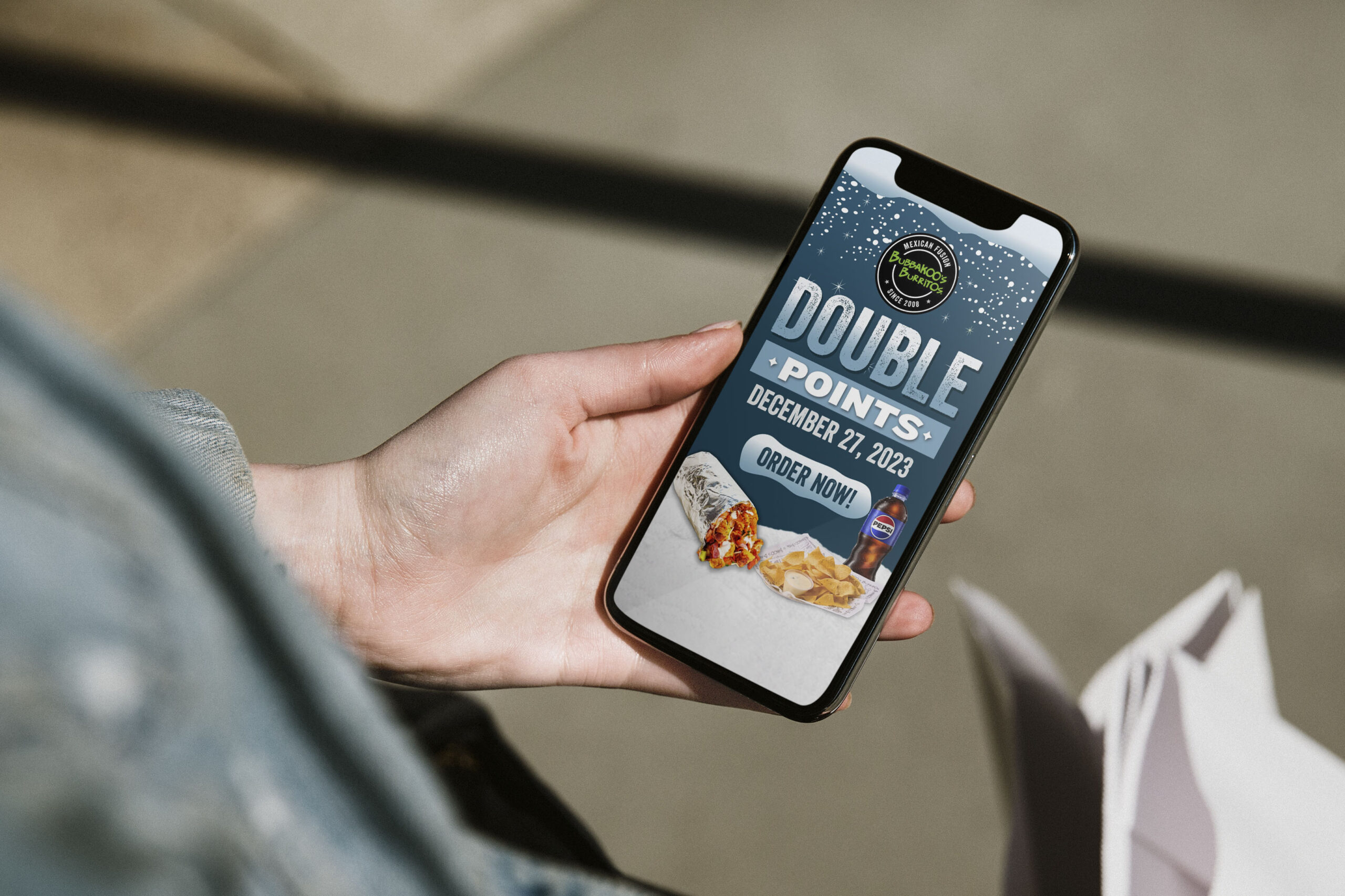
- Points, punch cards, and multipliers: Supports points-based programs, tiered redemption, visit- and item-based punch cards, and day- or time-based point multipliers, such as double-points Tuesdays or happy-hour promotions.
- Rule-based marketing automation: Brands can automate campaigns around roughly 40 targeting rules covering spend, recency, referrals, points, birthdays, and other customer behavior.
- AI reporting: Guest Journey churn prediction across seven guest segments (refreshed weekly, usable as targeting rules), Menu Intelligence scoring of menu items by their effect on retention, and Loyalty Pulse reporting.
- POS integrations: Incentivio integrates with systems including Toast, PAR Brink, Square, SpotOn, and Revel, although available capabilities vary by POS.
Pros
- A true all-in-one at a mid-market price, covering ordering, apps, loyalty, SMS, and surveys under one contract.
- Daypart and day-of-week points multipliers plus punch cards, mechanics several loyalty-first platforms do not offer.
- Real AI features: churn prediction you can target against and menu-level retention scoring.
- Intuitive dashboard.
- Responsive support.
Pricing
Incentivio hasn’t publicly published its standard pricing; however, its billing documentation describes a hybrid model that combines a fixed platform fee with usage-based charges for transactions, delivery fees and tips, and SMS. Texts are charged at $0.03 per 160-character segment. This applies to mobile marketing messages and certain transactional messages, including account verification and passwordless sign-in. Order confirmation texts are free. Because passwordless login is metered, a brand with 50,000 monthly logins pays roughly $1,500 a month just for guests to sign in.
Two of the three meters scale with order volume, so the bill grows as the digital program succeeds, which makes multi-year cost projections harder than with a flat per-location fee. Toast brands also pay a monthly integration fee before they can add the connection.
4. Toast Loyalty
Best for: Restaurants already committed to Toast POS that want basic rewards without adding a vendor.
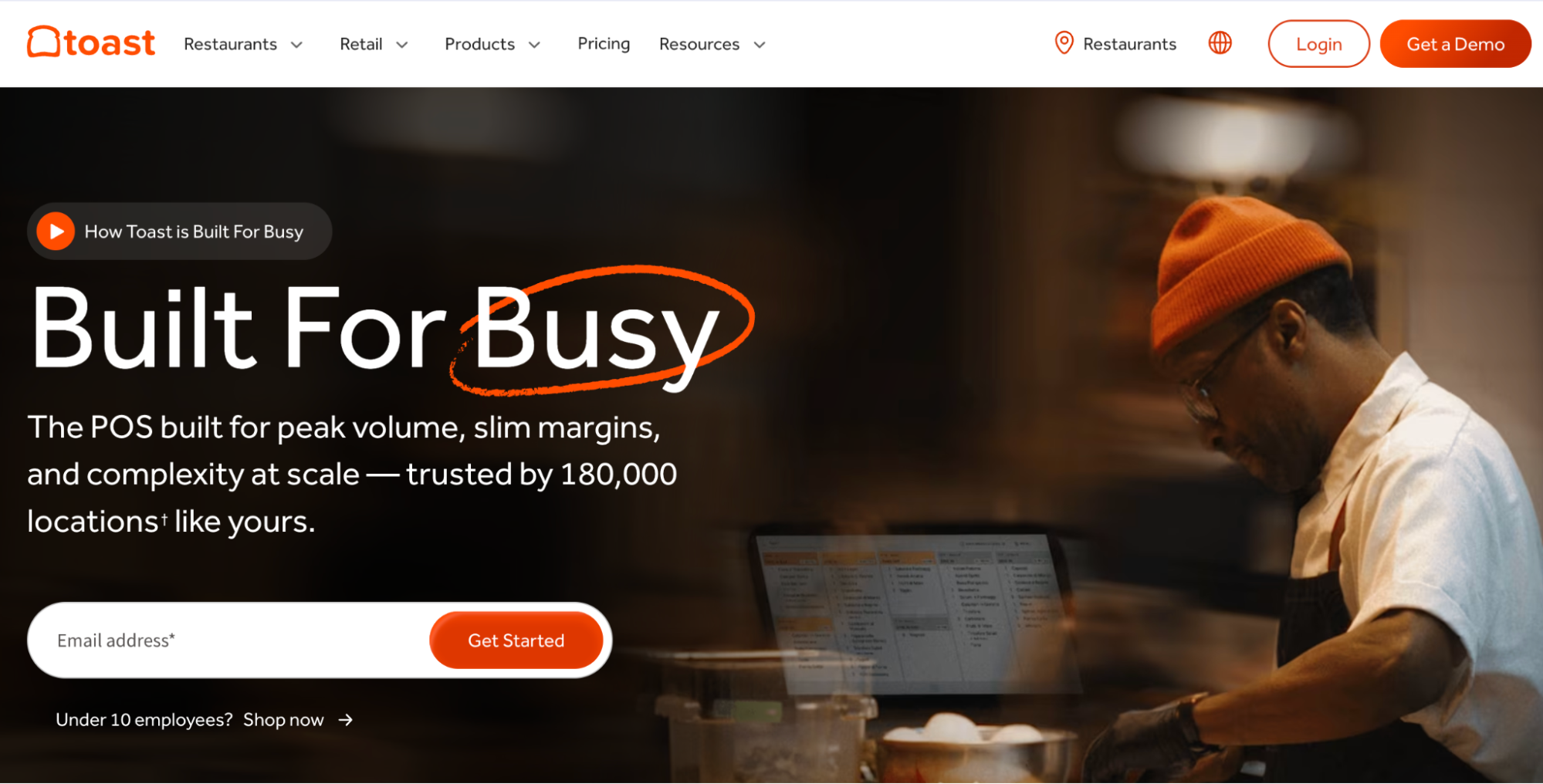
Toast Loyalty is a built-in rewards program inside Toast's restaurant platform, available only to brands already running Toast POS. It layers points-based loyalty onto the ordering, payment, and marketing tools Toast customers already use rather than operating as a standalone product.
Key Features & Differentiators
- Points ladder: Up to four reward thresholds, each paid out as a cash discount or a free item. No status tiers and no paid membership option.
- Toast-owned guest experience: Loyalty runs inside Local by Toast, Toast's consumer app, rather than a brand-owned app. Guests earn points in Toast Mobile Order & Pay, mobile payments, and Local, but can't redeem free-item rewards on those surfaces.
- Prebuilt automations: Nine email templates and five SMS automations, one channel per campaign, sent as a daily batch under a single 28-day frequency cap shared across all automations (about 13 automated touches per guest per year, by Toast's own worked example).
- Reporting: Last-touch attribution on a 14-day window with no control group. Toast's "loyalty sales lift" metric is loyalty sales divided by discount redeemed.
Pros
- One vendor and one system for Toast customers, with a simple setup.
- $0 incremental cost for operators already paying for Toast's Marketing Essentials suite.
- Easy to outgrow without replacing the POS: Thanx integrates with Toast, shares more than 100 customers with it, and has migrated 13+ brands off Toast Loyalty with members claiming their account by phone number and points transferring immediately.
Pricing
Sold through Toast Shop inside the Marketing Essentials suite, and Toast POS is required. Operators already paying for that suite pay nothing extra for loyalty, so check which Toast modules you are actually billed for.
The real cost shows up as discount give-back: because every reward is a discount or free item, a program running at the 10 to 12% industry-average effective discount rate returns $100,000 to $120,000 to guests on every $1M in loyalty revenue.
5. Sparkfly
Best for: Enterprise brands that live on promotions and need real-time offer redemption tracking at the POS.
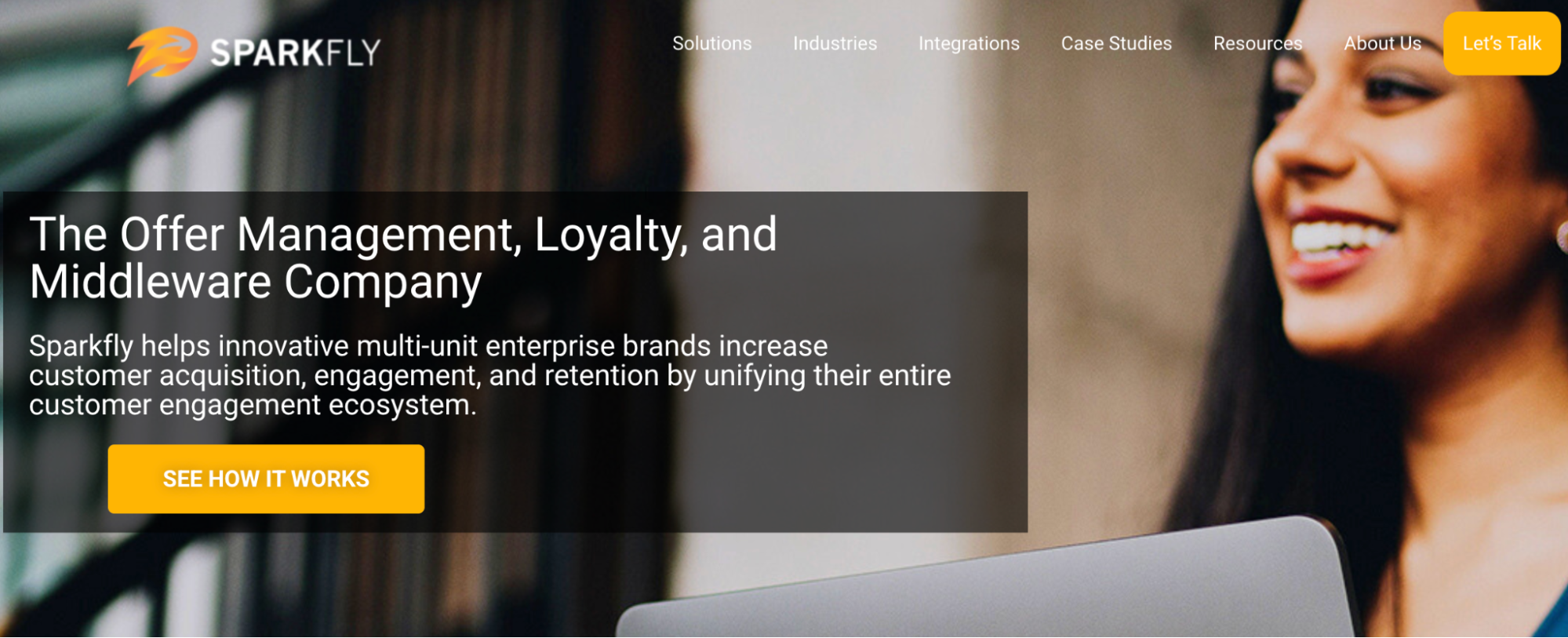
Sparkfly is an offer management and redemption tracking platform for enterprise brands that run heavily on personalized promotions. Its patented real-time POS middleware tracks offers from issuance through redemption, a narrower focus than a full loyalty suite.
Key Features & Differentiators
- Real-time, item-level POS middleware: Patented technology that validates offers at the item and modifier level, re-checks discounts as the check changes, and supports day- and time-windowed offers. Built to run across a wide range of POS systems, including legacy and homegrown setups.
- Secure one-time-use codes: Brands can distribute unique offer codes across digital and physical channels, with usage limits, fraud controls, and real-time redemption checks designed for large-scale promotions.
- Guest-facing offer tools: Apple Wallet passes, hosted landing pages, inbound SMS keywords, and trivia and quest mechanics, plus Sparkfly Rewards, a newer loyalty layer built to sit on top of a brand's existing marketing stack.
- Modular by design: Sparkfly acts as a real-time data hub between the POS and the rest of the stack. It has no native email, SMS, or push sending, so brands pair it with a marketing automation platform such as Iterable, Attentive, or Klaviyo, and often a CDP and a custom front end.
Pros
- Offer management that the marketers who run it consistently praise.
- Proven with Chipotle, Texas Roadhouse, and Bojangles.
- Works with almost any POS, including decades-old homegrown systems.
- A natural fit for enterprise IT teams that prefer best-of-breed tools over a single platform.
Pricing
Not published. Sparkfly is reported to charge a flat per-location, per-month fee around $40 at list, covering both offer management and its loyalty layer, with rates as low as $15 negotiable at scale.
Budget for the full stack, though: because Sparkfly handles redemption rather than guest engagement, most brands also pay for a marketing automation platform, a front end, sometimes a CDP, and the IT time to keep those integrations in sync.
Searching for a Punchh Alternative?
Every platform here solves a different problem. Paytronix is the broad veteran suite with particular strength in gift cards and stored value. Incentivio combines ordering and loyalty for mid-market brands. Toast Loyalty fits brands already committed to that stack. Sparkfly offers a layer rather than a full replacement.
But if you are evaluating Punchh loyalty alternatives because nobody can prove what your program earned, Thanx is the strongest alternative on this list.
Cheba Hut is a useful benchmark: after moving from Punchh to Thanx, the fast casual chain grew loyalty revenue capture 2.65x and active member engagement 2.7x.
Thanx is built for brands that want:
- Flexible testing that helps isolate what loyalty actually drove, so you can defend the number in a budget meeting.
- Enrollment that reaches more guests through App-less sign-up, native enrollment at the POS, and automatic enrollment on digital orders.
- Rewards that protect margin with non-discount options like secret menus, Access Pass perks, and modifier rewards.
- Loyalty that fits your existing stack through open APIs and 60+ integrations that connect to the systems you already use.
- Fast, low-lift implementation that averages roughly around 90 days, with no hardware and your existing app rolled over.
Request a demo to see what your enrollment, data capture, and discount rates could look like on Thanx.

.png)




.avif)
.avif)